Best CPAP Sanitizer Machine: Are they Worth It?


After more than a decade on CPAP therapy for severe sleep apnea, I’ve cleaned a lot of gear. Every mask, every hose, every humidifier chamber I’ve ever owned has been washed by hand, in my own sink, with warm water and mild soap. That’s my routine. It has been my routine for years, and it works.
So when readers ask me whether they should buy a CPAP sanitizer machine, I come at the question from the point of view of someone who doesn’t personally use one — but who has spent a long time caring about what actually matters for CPAP hygiene, and who has watched the sanitizer category go through a messy decade of marketing hype, FDA warnings, and genuine innovation.
This guide is the result of research, not personal ownership. I haven’t used a CPAP sanitizer myself. What I have done is spend a lot of time looking at the specs, the clearances, the FDA guidance, manufacturer documentation, and user reports — trying to work out which (if any) of these machines are worth the money for someone who wants an extra layer of germ protection on top of a proper wash.
Here’s what I’ve concluded. Most CPAP sanitizers aren’t worth buying. Two of them, based on my research, stand out as genuine exceptions: the LiViliti Paptizer Smart CPAP Sanitizer and the Lumin CPAP Cleaner.
My Top Picks at a Glance
If you’re short on time, here’s where I’ve landed after researching the category. Both are FDA-cleared, ozone-free, and use UV-C light — the only sanitizing technology I’d consider going near my own gear.
🥇 Best Overall: LiViliti Paptizer Smart CPAP Sanitizer Larger chamber, 360° UV-C coverage, and a 24-hour storage mode that keeps your mask sanitized between uses. Big enough to double as a household sanitizer for phones, keys, and other small items. The most versatile option I’ve researched.
🥈 Best Budget / Simplest: Lumin CPAP Cleaner A compact drawer-style unit with a single button and a five-minute cycle. Does one job and does it well. The right pick if you want something tidy, cheaper, and foolproof.
Ozone sanitizers (SoClean and similar): I’d steer clear. The FDA has specifically warned against them, and major CPAP manufacturers have documented damage to internal components from repeated ozone exposure. More on that below.
If you want the full reasoning behind these picks — and my honest view on whether you need a sanitizer at all — keep reading.
Do You Actually Need a CPAP Sanitizer?
Let me start with the question I think most articles skip. Do you need one of these machines? After ten-plus years of CPAP therapy, I can tell you this: no, you don’t. I’ve never owned one, and I’ve had no health issues traceable to my equipment.
What you do need is a consistent cleaning routine with soap and water. That’s non-negotiable. The Sleep Foundation makes the same point — masks, tubing, and humidifier chambers can collect bacteria, mold, and debris if you let them, and rare but serious illnesses have been traced back to poorly maintained CPAP machines. But the solution to that isn’t a gadget. It’s a sink, mild soap, warm water, and a bit of discipline.
So where does a sanitizer fit in? Honestly, for most people it’s a convenience purchase. If hand-washing daily feels like a chore you’re going to skip, a sanitizer can make the germ-killing step fast enough that you’ll actually do it. If you travel a lot and want a quick decontamination option on the road. If you’re immunocompromised or living with someone who is. If you’ve been sick and want extra peace of mind. Those are the cases where I think the spend is justifiable.
If you’re already diligent with a proper weekly wash — like I am — a sanitizer is an optional upgrade, not a must-have. I want to be honest about that because plenty of the marketing in this space suggests otherwise.
With the honesty out of the way, let’s look at what’s actually on the market, and why I’d only recommend two of them.
The Ozone Problem: Why Most CPAP Sanitizers Get It Wrong
For a long stretch, ozone-based sanitizers like SoClean dominated the category. The pitch was compelling: drop your mask in, close the lid, come back later, and marvel at the “touch-free” magic.
The problem is that the magic was ozone gas. And ozone is a known lung irritant.
The FDA has been explicit about this, stating that no ozone or UV light device has been cleared to clean or disinfect an entire CPAP machine. User reports consistently describe a sharp, almost chlorine-ish smell that lingers in the mask afterwards — something many people end up inhaling for an hour or two before it dissipates. Not what you want at 10 p.m. when you’re trying to wind down into sleep.
There’s a warranty issue on top of the health concern. ResMed, one of the biggest names in CPAP, has explicitly warned that prolonged ozone exposure can damage internal CPAP components over time, and they exclude ozone-related damage from their limited warranty. That’s a strong signal from a manufacturer that has every commercial incentive to stay neutral on third-party accessories. When they specifically carve out an exclusion, it’s because they’ve seen the damage firsthand.
That’s why I steer readers away from ozone sanitizers. If you’re looking at CPAP hygiene as a long-term investment, you don’t want a device that could potentially void the warranty on a far more expensive machine.
So if ozone is off the table, what’s left? UV-C.
UV-C Light: The Better Science
UV-C sanitizers take a completely different approach. Instead of flooding the chamber with a reactive gas, they bombard your equipment with short-wavelength ultraviolet light that physically damages the DNA and RNA of any microorganisms sitting on the surface.
Think of it like sunlight on steroids. Just as too much sun can damage the cells in your skin, UV-C light penetrates bacteria, viruses, and mold spores and scrambles their genetic code. Once a microbe’s DNA is scrambled, it can’t reproduce — and a microbe that can’t reproduce is a microbe that quickly dies off.
This isn’t fringe technology. Hospitals have used UV-C to disinfect operating theatres, patient rooms, and surgical equipment for decades. Laboratories use it to decontaminate workstations. Municipal water treatment plants use it as part of their sterilization process. It’s proven, it’s well-studied, and — critically — it leaves no residue and releases no irritating gas.
One thing worth being crystal clear about, and something I’d want any reader to understand before spending the money: UV-C sanitizers are supplemental, not replacements. They don’t remove oils, skin flakes, or dust, and they can’t reach inside crevices that the light can’t touch. You still need to do your regular wash with mild soap and water. (If you’re not sure exactly how to do that properly, I’ve written a step-by-step walkthrough here: how to clean a CPAP machine.) What UV-C does well is handle the germ-killing layer of the process quickly and without chemicals, between the proper washes.
That’s the right mental model. A sanitizer is a supplement. Soap and water is the main event.
With that groundwork laid, let’s look at the two machines I’d put on a shortlist.
LiViliti Paptizer Smart CPAP Sanitizer
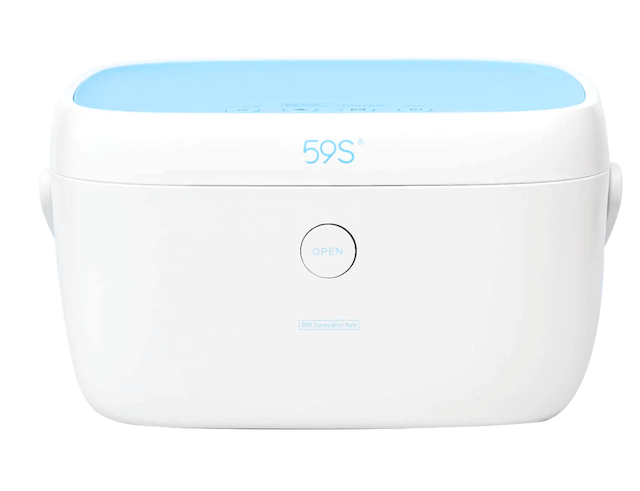
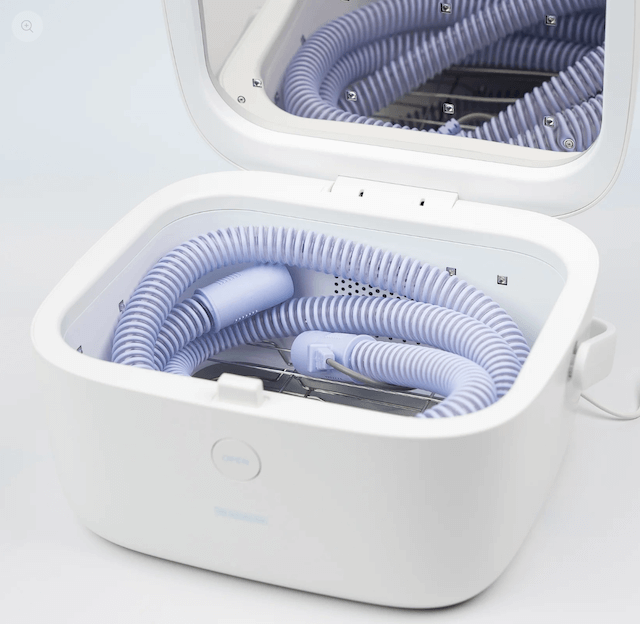
The Paptizer is the bigger, more versatile of the two units I recommend.
It’s a box-style sanitizer with a lift-up lid and a genuinely generous interior chamber. Inside are multiple UV-C LEDs arranged to hit your gear from several angles, which the manufacturer calls 360-degree coverage. In practice, that means fewer shadowed areas where the light can’t reach — and that matters, because UV-C only disinfects what it can directly illuminate.
How it works in practice, based on manufacturer guidance and user reports:
- After your regular morning wash and a proper towel dry, lift the lid and place the mask cushion and frame inside. The chamber is large enough to handle other small items too — phones, keys, remote controls.
- Close the lid and pick a cycle. The standard run is three to five minutes. There’s also a 24-hour storage mode that cycles UV-C intermittently to keep the interior sanitized between uses.
- When the indicator light switches off, everything’s done. No residue, no smell, no waiting around.
The chamber size is what sets this one apart. The 24-hour storage mode is genuinely clever — it means if you pull your mask off partway through the night and put it back in, you’re not leaving it to sit in room air. There’s also a carry handle on top, which makes it easier to shift around the house or take travelling.
The trade-offs, in fairness: the Paptizer is the pricier of the two and it does take up real estate on a nightstand. It’s not exactly discreet. But for the versatility and the storage mode, most users seem to feel it earns its footprint.
Lumin CPAP Cleaner
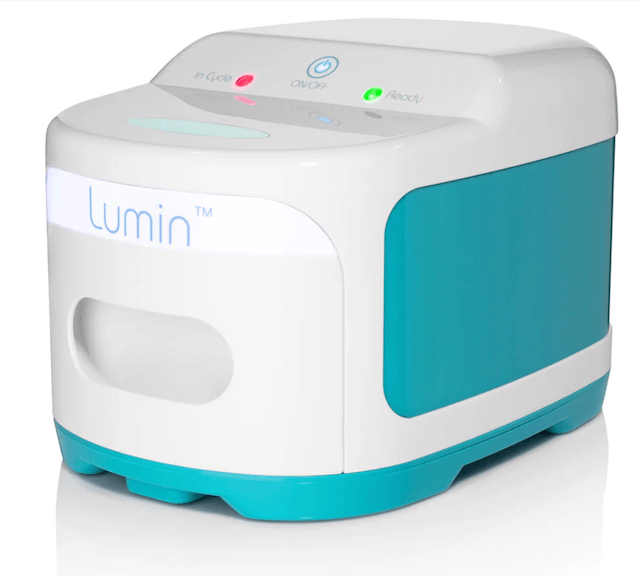
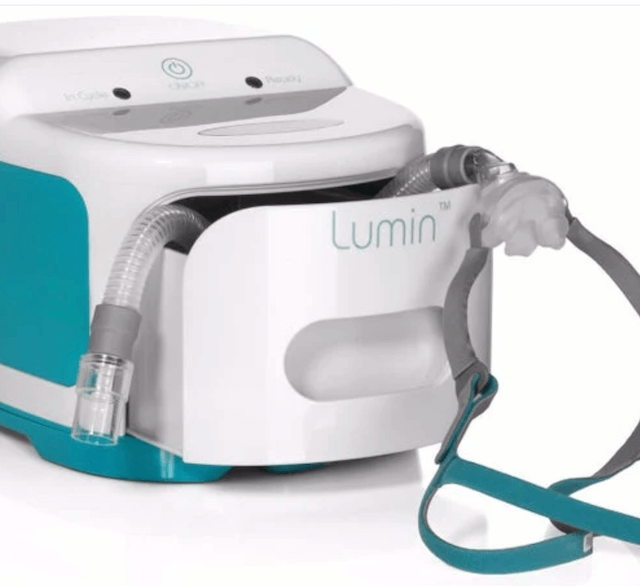
The Lumin takes the opposite design philosophy. Instead of a big lift-up chamber, it’s a drawer-style unit. You pull it open, place your gear inside, push the drawer closed, and press a single button. Five minutes later, UV-C has done its work.
How it works in practice:
- Open the drawer and place the mask or water chamber inside. The space is smaller than the Paptizer’s, which means the Lumin is better suited to masks, cushions, and humidifier chambers than to bulky household items.
- Slide the drawer shut and press the button. A five-minute cycle starts automatically.
- When the indicator beeps, the gear is sanitized.
The Lumin is the one I’d point people toward if they want something that just sits on the bedside table looking tidy and does one job well. There’s no menu to navigate, no mode to select, no phone pairing. You press a button. It works. For anyone who finds gadgets frustrating, that simplicity is a feature, not a limitation.
The compromise is versatility. If you want to sanitize your phone or anything bigger than CPAP parts, you’ll feel the size limitation. And there’s no 24-hour storage mode like the Paptizer has — so it’s a “clean once, use, repeat” workflow rather than an “always ready” one.
Paptizer vs Lumin vs Ozone: Side-by-Side
To make the comparison easy, here’s how they stack up against each other — and against the ozone-based sanitizers I’d steer people away from.
| Feature | LiViliti Paptizer Smart | Lumin CPAP Cleaner | Ozone Sanitizers (SoClean, etc.) |
|---|---|---|---|
| FDA Clearance | ✅ Yes | ✅ Yes | ❌ No |
| Method | UV-C light (360° coverage) | UV-C light (5-min cycle) | Ozone gas |
| Chamber size | Larger — fits masks, phones, bottles | Smaller — mask and water chamber | Bulky overall footprint |
| Safety profile | No ozone, no residue | No ozone, no residue | Ozone leakage risk, lung irritation |
| Convenience | Multiple modes, 24-hour storage | One-button, 5-minute cycle | Filters and cartridges to replace |
| Price | ~$299 | ~$249 | $300–$400 plus consumables |
The two UV-C machines are close. The ozone option is a distant third, for good reason.
Which One Would I Recommend?
If someone asked me to pick just one, I’d point them at the LiViliti Paptizer Smart.
🥇 It takes the top spot because of how much it does beyond just sanitizing a mask. The 24-hour storage mode is genuinely useful for anyone who doesn’t want to wonder what’s grown on their mask between uses. The versatility, the carry handle, and the larger chamber all add up to something that fits into everyday life rather than sitting in a cupboard.
🥈 The Lumin CPAP Cleaner is the better pick if you want something simple, compact, and more affordable. If the Paptizer feels like more gadget than you need, the Lumin is a rock-solid alternative that does exactly what it says on the tin.
Either way, both machines share the qualities that matter: FDA clearance, ozone-free operation, and proven UV-C technology. You’re not compromising on the science with either one.
My Actual Cleaning Routine (No Sanitizer Required)
I want to be straight with you about this part, because it’s the bit most review articles don’t bother with. My own CPAP cleaning routine doesn’t include a sanitizer. I hand-wash everything. I’ve done it this way for more than ten years and it has served me well.
Here’s what I actually do:
Daily: Empty and rinse the humidifier chamber. Let it air dry during the day. Refill with fresh distilled water right before bed. Wipe down the mask cushion with a damp cloth.
Weekly: A proper wash of the tubing, mask, and humidifier chamber in the sink with mild soap and warm water. Rinse thoroughly. Air dry everything on a clean towel, out of direct sunlight. I’ve written out the exact cleaning supplies I use if you want to copy my setup.
Monthly: A vinegar soak for the humidifier chamber if there’s any hint of mineral buildup. One part white vinegar to three parts warm water, twenty minutes, then a thorough rinse with clean water.
When I’m sick: I ramp everything up. Daily soap-and-water washing for the tubing and mask, and often a fresh filter. I’ve written a more complete guide on using CPAP when you’re sick because it genuinely affects how quickly you recover — and how likely you are to reinfect yourself from equipment that’s been carrying what you breathed out the night before.
A sanitizer would fit neatly on top of this routine as a daily UV-C cycle after the damp-cloth wipe-down. For some readers — especially those who find consistent hand-cleaning hard to maintain — that extra step could be the thing that keeps the whole routine on the rails. For others, like me, it’s just not necessary.
Your call. Honest opinions on both sides.
A Quick Word on Skin, Masks, and Why This All Matters
If you’ve ever noticed red patches, itchy spots, or what looks like eczema where your mask cushion meets your skin, there’s a reasonable chance your gear is playing a role. This kind of reaction is common enough that I wrote a whole piece on CPAP dermatitis — but the short version is that the oils, skin flakes, and microbial residue that build up on a mask cushion are often the culprit. A clean mask, whether you achieve that with rigorous hand-washing or by adding a sanitizer on top, is often the simplest fix.
That’s the part of the sanitizer conversation that gets overlooked. We talk about germs as an abstract concern. But for a lot of long-term CPAP users, the real issue is a slow drift into skin irritation, sinus congestion, and a subtly worse sleep experience — all of which better hygiene can push back against.
Frequently Asked Questions
Do CPAP UV sanitizers really work? Yes — when used correctly. UV-C light has been well-documented to inactivate a wide range of bacteria and viruses. Just remember: sanitizers deal with microbes. They don’t remove oils, skin cells, or residue. Soap and water are still non-negotiable.
How often should I use the Paptizer or Lumin? According to manufacturer guidance, daily is ideal for mask cushions and frames. Tubing and humidifier chambers still need a proper weekly wash with soap and water regardless.
Will UV light damage my CPAP parts? No. Both the Paptizer and the Lumin are designed with CPAP materials in mind and are rated for repeated daily use. This is one of the biggest differences between UV-C sanitizers and ozone units — ozone is known to eventually damage CPAP internals, which is why ResMed specifically excludes ozone-related damage from their warranty.
Can I sanitize non-CPAP items in these machines? The Paptizer, yes — that’s one of its selling points. Phones, keys, and other small items that fit and are UV-safe. The Lumin is smaller and better suited to CPAP parts and small accessories.
Do they replace washing with soap and water? No. Think of them as complementary. Soap and water pull the dirt and oils off. Sanitizers handle the germs. Both matter, and neither does the other’s job.
Are there any CPAP machines that clean themselves? A few machines have features marketed along those lines. I’ve written separately about self-cleaning CPAP machines and where the marketing outpaces reality.
The Bottom Line
CPAP sanitizers have had a rough decade of marketing. The ozone era didn’t do the category any favours, and it’s no wonder many long-term CPAP users — myself included — still clean by hand and feel no urgent need to change.
But if you’re going to buy one, the FDA-cleared UV-C machines are the only ones I’d put on a shortlist. Based on my research, the LiViliti Paptizer Smart and the Lumin CPAP Cleaner are the two worth looking at.
They don’t replace soap and water. They don’t excuse you from a proper weekly wash. What they can do is make the germ-killing step faster and more consistent, and for readers who struggle with daily cleaning discipline, that alone can be worth the price.
Your CPAP is, in a very real sense, your lifeline. A decade in, I’m still as careful with mine as I was in my first year of therapy. Whether you reach that care through hand-washing, a sanitizer, or a combination of both is up to you — but please, don’t skip the step altogether.
If you’re ready to add a sanitizer to your routine, here are the two I’d point you to:
⚠️ MEDICAL DISCLAIMER This blog provides general information only and is not a substitute for professional medical advice, diagnosis, or treatment. Sleep apnea is a serious condition, and CPAP equipment should be used under proper medical supervision. Always consult your doctor or sleep specialist before starting, stopping, or changing any therapy. I share personal experiences as a CPAP user, not as a medical professional. Individual results vary. For medical guidance, please consult a qualified clinician or the American Academy of Sleep Medicine (aasm.org).