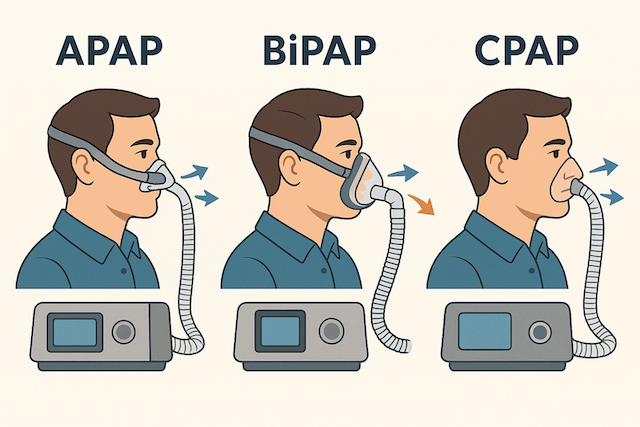
Your First Night with CPAP: What to Expect and Why It’s Worth It

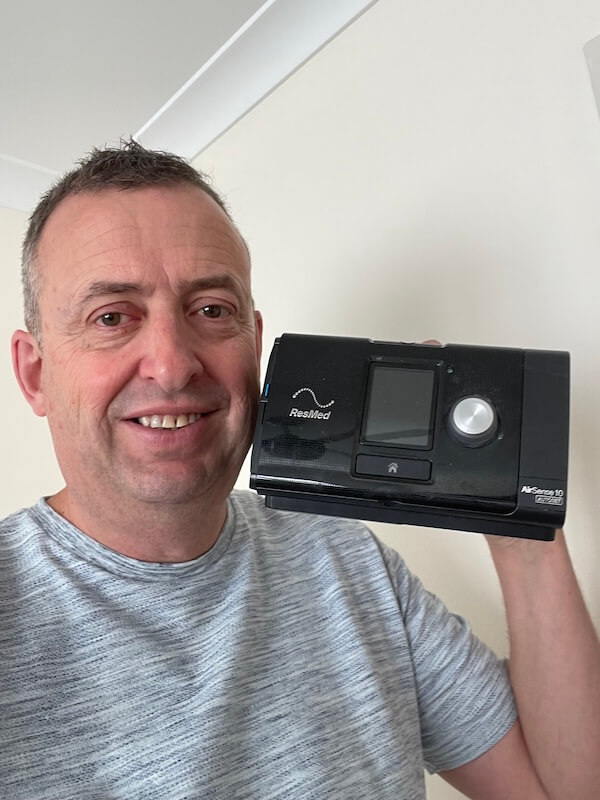
I remember standing in my bedroom holding the mask for the first time, the machine sitting on my bedside table still in its box, thinking: I am going to have to wear this thing every night for the rest of my life.
That thought was harder to sit with than I expected. I’d been exhausted for years. Morning headaches, brain fog that wouldn’t lift, dragging myself through days I should have been enjoying. I knew the diagnosis was right. I knew this machine was the answer. But knowing something is good for you and actually strapping it to your face are two different things.
That first night was not smooth. I tightened the straps too much. I kept adjusting the hose. I pulled the mask off at some point in the early hours, more asleep than awake, and didn’t bother putting it back on. By my best estimate I got maybe three hours of proper use out of it.
And then I woke up.
I want to be clear about this because it’s the part that gets buried in most articles about starting CPAP: I felt different that first morning. Not dramatically transformed, not a new man, but noticeably better than I had felt waking up in years. The heaviness I’d become so accustomed to wasn’t as heavy. My head was clearer. Something had shifted.
Three hours of imperfect therapy, and I could already feel it working.
That experience isn’t universal, and I’ll come back to that. Some people take weeks to notice a difference. But for me, it was almost immediate, and I think that early sign made all the difference to whether I stuck with it through the adjustment period. I want to be honest about my experience because if you’re about to do your first night, or you’re two nights in and wondering if it’s going to be worth the discomfort, I want you to know: it might happen faster than you think.
What the First Night Actually Feels Like
The sleep technician who set me up spent about twenty minutes explaining everything. I absorbed roughly half of it, partly because I was tired and partly because I was staring at the mask thinking about how strange it was going to feel. That’s normal. Most people are too overwhelmed to take in the full briefing on day one.
The mask itself is the main thing to get used to. Your brain doesn’t know what to make of it. Something is covering your face that wasn’t there before, air is being pushed into your airway at a pressure you’ve never experienced, and your instinct is to remove it. This is just your nervous system doing its job. It doesn’t mean anything is wrong.
The air pressure can feel strange at first, like breathing against a gentle resistance when you exhale. Most modern machines have a ramp feature that starts at a lower pressure and builds gradually as you fall asleep. If yours has this, use it. Starting at full pressure the moment you lie down is harder to adjust to than easing into it.
The sound of the machine is something most people stop noticing within a few nights. On the first night it can feel loud even when it isn’t. Your attention is on everything because everything is new.
What I’d suggest, and what I did myself though not intentionally on the first night, is to wear the mask while you’re still awake. Watch something on your phone or tablet, read, anything that occupies your brain with something other than the sensation of the mask. Twenty minutes of wearing it while you’re relaxed and distracted does more for adjustment than an hour of lying in the dark thinking about it.
The Things That Tripped Me Up
The most common mistake on night one is overtightening the headgear. I did this, assuming tighter meant a better seal. It doesn’t. It means more pressure on your face, more discomfort, and often more leaks because the cushion is being distorted rather than sitting naturally. The right fit is snug enough that you can slide one finger underneath the straps. If you’re pulling them beyond that, you’re making it harder than it needs to be. Overtightening is also how you end up with red marks on your face in the morning.
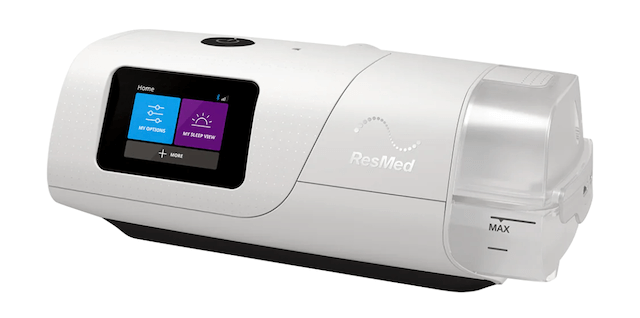
The second thing that made a real difference was the humidifier. Dry pressurised air through a mask is noticeably uncomfortable, and discomfort is the enemy of compliance in those early nights. My ResMed had a built-in heated humidifier and getting that set at the right level for my environment made the air feel much more natural to breathe. If you’re experiencing dryness or dry mouth in the mornings, the humidity setting is the first thing to adjust.
Mask leaks are the other early frustration. A small hiss is normal and manageable. A significant leak that’s blowing air into your eyes or making the machine work harder is worth fixing, and usually the fix is just repositioning rather than tightening. If you wake up mid-night with a major leak, take the mask off, reseat it properly, and put it back on rather than tightening the straps in a half-asleep fog.
My pillow was also a problem I didn’t anticipate. A regular pillow pushed the mask sideways when I turned onto my side, breaking the seal. A CPAP pillow with the cutaway sections on each side solved this properly. It’s one of the first things I’d recommend buying if you haven’t already.
If You Wake Up and Take It Off
Almost everyone does this at some point in the first week, often without fully waking up. You’ll sometimes realise in the morning that the mask is on your bedside table with no memory of removing it.
This is not failure. Your sleeping brain is doing what sleeping brains do with unfamiliar sensations. The response is simply to put it back on when you wake and notice it’s off, and then do the same the following night. The instinct fades as the mask becomes normal. By two weeks in most people stop removing it unconsciously.
What actually matters is the direction of travel. Three hours the first night, four the second, five or six the third. That progress, even when it’s imperfect, is what counts.
For People Who Don’t Feel Better Straight Away
I want to be honest here because my experience of feeling better almost immediately is not everyone’s experience, and reading about other people’s instant results when you’re still struggling at two weeks can feel demoralising.
Some people take longer to notice a benefit, and there are a few reasons this happens. If pressure settings aren’t quite right for you, the therapy might be partially effective rather than fully. If the mask type isn’t suited to how you sleep or breathe, discomfort can disrupt sleep enough to offset the benefit of the treatment itself. If you’re waking up with a dry mouth or experiencing rainout in the tube, those things affect sleep quality independently of whether the apnea is being treated.
The point is that if you’re not feeling better after a few weeks of consistent use, there is usually a fixable reason. Your equipment provider can adjust pressure, swap mask types, and troubleshoot based on your data. Research on CPAP adherence consistently shows that the patients who stick with therapy long enough to find the right setup overwhelmingly report significant quality of life improvements. The ones who give up in the first two weeks often do so because a fixable problem wasn’t identified and solved.
Don’t suffer in silence for weeks, assuming the discomfort is just the cost of therapy. A lot of it is adjustable.
What the Data Shows You
Most modern CPAP machines connect to an app: MyAir for ResMed, DreamMapper for Philips. From the second morning, you can see your usage hours, your leak rate, and your therapy score. I found this genuinely useful in those early weeks, not because I was obsessing over the numbers, but because seeing even small improvements was motivating when the physical experience of adjusting to the mask was still difficult.
If you had a rough night but the data shows your therapy was working during the hours you did manage, that’s worth knowing. If your leak rate is high and your score is low, that’s also worth knowing because it tells you something is off that can be fixed.
The data interpretation gets more useful as you get a few weeks of baseline to compare against. But even on day two, opening the app and seeing that something was happening while you slept connects the discomfort to a purpose in a way that makes it easier to try the next night again.
What Changes After the First Week
By the end of the first week for most people, the mask has gone from feeling like a foreign object to feeling like something that just needs to be adjusted properly. The sounds of the machine blend into the background. The air pressure becomes the new normal rather than something to fight against.
By two weeks, the majority of people report that they’ve stopped consciously noticing the mask during the night. The therapy becomes something that happens rather than something you have to manage.
The benefits deepen over time too. The immediate improvement I noticed in those first few mornings continued to develop over the following months. The migraines that had been a regular part of my life faded and eventually stopped. The brain fog that I’d attributed to age or stress cleared. I had energy in a way I’d stopped expecting.
Eleven years on, putting the mask on at night is as unremarkable as brushing my teeth. The machine that felt like an alien device sitting on my bedside table is just part of how I sleep. I genuinely don’t think about it.
That first night was the hardest one. Everything after it was easier.
A Few Practical Things Worth Knowing
If the mask cushion smells like a rubber factory when you first open the packaging, give it a gentle clean with fragrance-free soap and warm water before you use it. New silicone has a chemical smell that fades quickly but can be off-putting on the first night.
If you’re a side sleeper, the pillow matters more than you might think. A standard pillow pushes the mask sideways. A CPAP-specific pillow with the cutaway sections on each side keeps the seal intact when you turn over.
If the pressure feels too forceful when you’re trying to fall asleep, check whether the ramp feature is enabled. If it is, and you’re still finding it hard, mention it to your provider. Pressure settings are adjustable, and getting them right for you makes a real difference.
And if you’re finding the noise of the machine distracting, research suggests that background sound like a fan or white noise helps new CPAP users fall asleep faster in those early nights by masking the machine sounds until habituation kicks in.
The Only Thing That Matters on Night One
Get through it. Wear the mask as long as you can. If you pull it off in the night, put it back on. If you only manage two hours, that’s two hours more than nothing.
The first night is not representative of what CPAP is going to be like for you. It’s the worst version of it when everything is new, and your brain is busy cataloguing every unusual sensation. The experience gets meaningfully better from night two, and it keeps improving from there.
What you’re doing when you put that mask on is treating a serious condition that was silently affecting your health, your mood, your thinking, and for many people, much more than that. The discomfort of the adjustment period is temporary. The benefit of treating sleep apnea properly is not.
That first morning when I woke up and something felt different, I knew I wasn’t going to quit. I hope your first morning gives you the same signal.
⚠️ MEDICAL DISCLAIMER This blog provides general information only and is not a substitute for professional medical advice, diagnosis, or treatment. Sleep apnea is a serious condition, and CPAP equipment should be used under proper medical supervision. Always consult your doctor or sleep specialist before starting, stopping, or changing any therapy. I share personal experiences as a CPAP user, not as a medical professional. Individual results vary. For medical guidance, please consult a qualified clinician or the American Academy of Sleep Medicine (aasm.org).