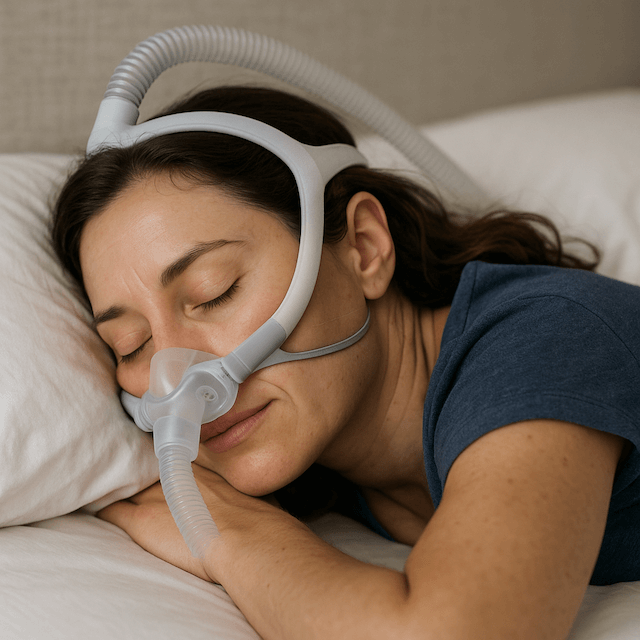
How to Sleep Better with Sleep Apnea: What I’ve Learned After More Than a Decade


When I was diagnosed with severe obstructive sleep apnea, my AHI was 51. That number put me well into the severe category, and starting CPAP therapy genuinely changed my life. But I’ll be honest about something the brochures don’t tell you: getting a CPAP machine and getting good sleep are two different projects.
The machine handles the airway. Everything else, the bedroom, the schedule, the routine, the food and drink, the way you wind down at night, is still on you. After more than a decade of using a ResMed AirSense 10 with a full face mask, I’ve come to think of CPAP as the foundation rather than the finish line. The therapy keeps me breathing. The habits I’ve built around it are what actually let me wake up rested.
This guide is the kind of advice I wish someone had handed me a few months into therapy, when the novelty had worn off and I was ready to ask, “Okay, what next?” I’m not a doctor. My background is in computer science, not medicine. What follows is a mix of practical experience and well established sleep science, with links to authoritative sources and to my own deeper articles where it helps.
Treat CPAP as the Floor, Not the Ceiling
Before we get into anything else, the first thing to say is that CPAP only works if you’re using it. That sounds obvious, but compliance is genuinely the biggest predictor of how well you’ll sleep. If you’re still in the early weeks and the mask is winning more battles than you are, that’s a separate problem worth solving first. I’ve written about getting used to CPAP therapy and overcoming CPAP anxiety, and the strategies in those posts are where I’d start.
Once you’re wearing the mask consistently, the rest of this guide becomes useful. Until then, no amount of sleep hygiene is going to compensate for an airway that keeps collapsing. CPAP first, then everything else.
Sleep Position Matters More Than Most People Realize
Sleep position interacts directly with apnea severity. When you sleep on your back, gravity helps the tongue and the soft tissues at the back of the throat fall toward the airway. For many people with obstructive sleep apnea, that means more events per hour and worse oxygen drops, even with therapy running. Side sleeping generally takes that gravity assist away and gives the airway a clearer path.
If you’re someone who sleeps better on your back and resists the change, you’re not unusual, and the fix isn’t always willpower. There are practical positional therapy options for sleep apnea that gently train you to stay off your back. I’ve also written a longer breakdown of the best sleeping positions for sleep apnea if you want the full picture, including what to do if you’re a stomach sleeper or a chronic roller.
The honest caveat is that the “best” position is the one you can actually maintain through the night while keeping your mask sealed. Some people sleep beautifully on their side. Others end up on their back no matter what they try. Knowing which one you are is the first piece of useful data.
Build a Bedroom That Invites Sleep
Sleep environment is one of the cheapest interventions you can make and one of the most underrated. The basic principles are well documented. The Sleep Foundation’s overview of sleep hygiene and Harvard Health’s article on simple sleep hygiene practices both land on the same handful of variables: temperature, light, noise, and what the bed itself is associated with.
For temperature, most adults sleep best in a room that’s noticeably cool. The commonly cited range is roughly 60 to 67 degrees Fahrenheit, or about 15 to 19 Celsius. This matters more for CPAP users than people realize, because waking up overheated is one of the most common reasons people pull the mask off in the middle of the night without remembering it the next morning. Living in Western Australia, I’ve had to take cooling seriously. A fan, lighter bedding in summer, and shutting blinds against the afternoon sun all help. If you live somewhere humid, a dehumidifier in the bedroom is worth considering.
Light comes next. Even small amounts of light at night can suppress melatonin and fragment sleep. Blackout curtains, black tape over LED indicators, and a clock turned away from the bed all sound like small things, but they add up. If your CPAP machine has a bright display, check whether you can dim it or angle it away from your face. The ResMed AirSense 10 lets you turn the screen brightness down, which is one of those settings I never adjusted for years and immediately appreciated once I did.
Noise is the third lever. A consistent background sound, a fan, a white noise app, or even the soft hum of the CPAP itself, generally helps more than total silence. Total silence makes sudden noises stand out. Steady sound smooths the edges.
Finally, the bedroom should mostly be for sleeping. Working in bed, scrolling in bed, watching shows in bed, all of it weakens the association between the bed and sleep. I’m not religious about this, but I’ve noticed that on nights where I fall asleep on the couch with the TV on, I sleep noticeably worse once I do get to bed. Whatever the mechanism, the pattern is real.
A Schedule You Actually Keep Beats a Perfect One You Don’t
Going to bed and waking up at roughly the same time, every day including weekends, is one of the most consistent findings in sleep research. Your circadian rhythm rewards consistency. Erratic schedules give you a kind of low grade jet lag, even when you’re sleeping in your own bed.
I used to be a believer in catching up on sleep over the weekend. The problem with that, as I eventually learned, is that the catch up sleep tends to be lower quality, and shifting your wake time by two or three hours on Saturday makes Sunday night harder to fall asleep, which makes Monday harder, and so on. Setting a fixed wake time, even when I haven’t slept well, has done more for my overall energy than almost any other change.
If you’re trying to shift your schedule, do it gradually, fifteen to thirty minutes at a time, rather than in big jumps. Morning sunlight helps anchor your body clock. So does eating meals at consistent times. And if you nap, keep it short, ideally twenty minutes or so, and earlier in the day rather than late afternoon.
Mask Fit and Skin: Comfort Is a Compliance Issue
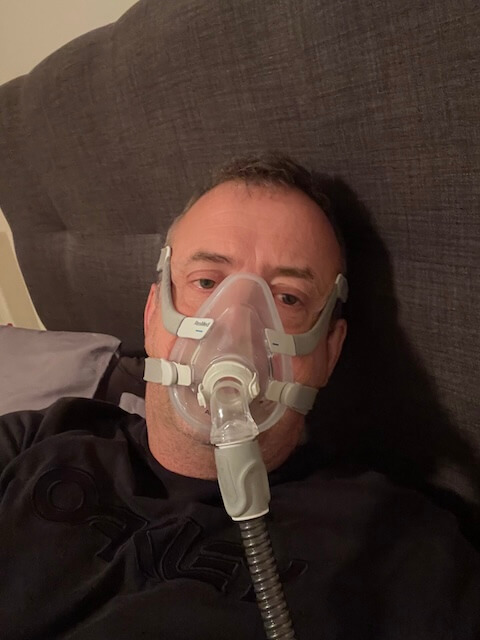
A mask that hurts is a mask that gets pulled off in the night, and a mask that gets pulled off doesn’t treat anything. I’m a chronic mouth breather, which is why I’ve used a ResMed AirFit F20 full face mask the whole time I’ve been on therapy. It’s the only mask I’ve ever owned, and for my anatomy it works.
That said, full face masks come with their own problems. They can leave pressure marks on the bridge of the nose and along the cheeks. The straps can leave lines that take a while to fade in the morning. Skin irritation, breakouts, and red patches under the cushion are all common. Most of these problems have practical fixes.
Mask liners sit between the cushion and your skin and reduce both irritation and air leaks. They’re cheap, they’re easy to replace, and they extend the life of the cushion itself. I’ve also found that paying attention to sleep positions that prevent CPAP strap marks makes a difference, particularly if you’re a side sleeper whose mask is getting compressed against the pillow.
If you’re getting persistent skin issues that don’t respond to liners and basic hygiene, it’s worth reading up on CPAP dermatitis, which is a real and treatable condition rather than something you have to live with. And if your mask isn’t right for your face, no amount of liner is going to fix it. There’s a reason there are nasal pillows, nasal masks, and full face masks. The different mask types exist because faces are different.
Alcohol, Caffeine, and the Things That Don’t Look Like Sleep Problems
Alcohol is the one I’d flag most strongly. The folk wisdom that a drink helps you sleep is half true and entirely misleading. Alcohol does shorten the time it takes to fall asleep, which is the part people remember. What it also does is fragment sleep in the second half of the night, suppress REM, relax the muscles of the upper airway, and make snoring and apnea events worse. Harvard Health notes that alcohol can worsen snoring and reduce REM, an important stage for cognitive function and mental health. For someone with sleep apnea, that’s a meaningful effect, not a rounding error. I’m not going to tell anyone to never drink. I’d just say that the closer to bedtime you drink, and the more you drink, the worse your therapy data is likely to look the next morning.
Caffeine is more individual. Some people metabolize it quickly and can drink a coffee at four in the afternoon without consequence. Others, and I include myself, are much more sensitive than they realize. My wife’s family is Italian, where an espresso after dinner is normal social ritual rather than a sleep problem, and watching them do it without consequence has been a useful reminder that bodies handle caffeine very differently. A sensible default for most people is no caffeine after early afternoon, and if you suspect it’s affecting you, try a week without any after lunch and see what changes.
Sedatives and sleeping pills are a separate conversation worth having with your doctor, not the internet. Some are safer with sleep apnea than others. Some, particularly benzodiazepines and certain over the counter sleep aids, can relax the airway in the same way alcohol does and make events worse. If you’re being prescribed something to help you sleep, mention your sleep apnea diagnosis explicitly.
Keep the CPAP Itself in Working Order

A neglected machine is a less effective machine, and a dirty mask is uncomfortable in ways that compound over time. None of this is complicated, but it does have to actually happen.
A reasonable routine looks something like this: wipe the mask cushion daily with a soft cloth, wash the mask, headgear, and tubing weekly with mild soap and water, change the humidifier water every day rather than topping it up, and replace consumables on the schedule the manufacturer recommends. I’ve put together a longer guide on how to clean a CPAP machine and a separate piece on the CPAP replacement schedule if you want the specifics.
One thing I’ll mention from personal experience. My first AirSense 10 lasted about four years before the internal blower bearing started to fail. I’m now on my second machine. The reason I’m noting this is that machines do wear out, and a slightly noisier than usual hum is sometimes a real signal rather than your imagination. If your machine starts behaving differently, get it looked at.
Daytime Movement Helps Nighttime Sleep
The link between regular physical activity and better sleep is one of the most robust findings in the literature. You don’t need to train for a marathon. Thirty minutes of moderate movement most days, ideally not in the last hour or two before bed, does measurable work on both how quickly you fall asleep and how deeply you stay asleep.
For people with sleep apnea, exercise has a second benefit beyond sleep quality. Weight loss, when relevant, can reduce apnea severity, sometimes meaningfully. That’s not a promise that you can exercise your way out of CPAP. For most people with moderate to severe apnea, the structural causes don’t simply disappear. But it’s a real lever, and it’s worth pulling.
The kind of movement matters less than whether you actually do it. Walking counts. Swimming counts. Strength training counts. Cycling counts. Pick the one you’ll keep doing in three months.
For me, weather doesn’t always cooperate, which is why I keep a walking pad indoors. On wet or cold days when going outside isn’t appealing, having one within a few steps of the desk has been the difference between a thirty minute walk and a sedentary day. It folds away when I’m not using it, which is the only reason it’s still in the house rather than in the garage.
Wind Down Like You Mean It
The hour before bed sets the tone for the night. The biggest single change most people can make is putting the screens away earlier than they want to. Phones, tablets, and televisions emit light in a part of the spectrum that suppresses melatonin and signals to the brain that it’s still daytime. An hour without screens is the standard recommendation. Half an hour is better than nothing.
What you replace screens with is up to you. Reading on paper, a warm shower, gentle stretching, a short journal entry, a slow conversation with a partner, all work. So does breathwork. Box breathing, where you inhale for four seconds, hold for four, exhale for four, hold for four, and repeat, is simple, free, and quietly effective at shifting the nervous system out of fight or flight.
If you find your mind racing the moment you lie down, a short brain dump on paper before bed can help. Write the worry list down so your brain doesn’t feel like it has to keep rehearsing it.
Two CPAP Issues Worth Knowing About
These two come up enough with mouth breathers and people in warm climates that they deserve their own mention.
The first is CPAP rainout, which is the condensation that builds up in the tubing when the air in the hose cools below the dew point. You wake up to a gurgling noise and sometimes a face full of water. The fix is usually a heated hose, a tubing wrap, or adjusting the humidifier setting. It’s an annoying problem with straightforward solutions.
The second is CPAP dry mouth, which is particularly common in mouth breathers and people whose mask seal isn’t quite right. A full face mask helps if you can’t keep your mouth closed at night. So does adjusting humidity. So does staying well hydrated during the day. Persistent dry mouth that doesn’t respond to those changes is worth raising with your sleep clinician, because it can sometimes point to a pressure or fit issue.
When to Loop in Your Doctor
Most of what I’ve written above is in the bucket of “things you can try yourself before involving a clinician.” There are some signals that should send you back to your sleep doctor sooner rather than later.
If you’re using your machine consistently and you still feel tired during the day, that’s worth investigating. Your pressure setting may need adjusting. Your mask may not be sealing well. You may have central events that an APAP isn’t handling. You may have a separate sleep disorder layered on top of the apnea. The data download from your machine, which you can review yourself with OSCAR software or with your clinician, often tells the story.
If you’ve developed new symptoms, morning headaches, sudden weight changes, daytime gasping, mood changes, those are worth flagging too. Sleep apnea has downstream effects on mental health, cardiovascular health, and cognition that aren’t always obvious from the inside.
Frequently Asked Questions
Is side sleeping really better than back sleeping for sleep apnea?
For most people with obstructive sleep apnea, yes. Back sleeping tends to allow the tongue and soft tissues to fall toward the airway and increases the frequency of events. Side sleeping reduces that effect for most people. There are exceptions, particularly for people whose apnea is positional in a less typical way, which is why a sleep study and a conversation with your doctor matter.
Does CPAP actually improve sleep quality, or just keep me breathing?
Both, for most people. Keeping the airway open prevents the micro arousals that fragment sleep, and that fragmentation is a big part of why untreated sleep apnea leaves people exhausted. With consistent therapy, deep sleep and REM both tend to improve. The catch is that “consistent” matters. Wearing the mask for two hours a night and then taking it off doesn’t deliver the same benefit as wearing it through the night.
How many hours per night do I really need to wear it?
The standard insurance compliance threshold in the United States is at least four hours a night on seventy percent of nights. That’s a floor for paperwork purposes, not a target for actual health. If you want the full benefit, the goal is wearing it whenever you’re asleep, every night.
What if I wake up and find the mask off?
This is common, particularly in the first months. The fix is usually some combination of mask fit, humidity, pressure, and habit. Wearing the mask for short periods while you’re awake during the day can help your brain stop treating it as a foreign object. If it keeps happening, it’s worth a conversation with your sleep clinician rather than a private struggle.
Can lifestyle changes replace CPAP?
For mild apnea, sometimes. For moderate to severe apnea, generally not. Weight loss, alcohol reduction, positional therapy, and treating nasal congestion can all reduce severity, sometimes significantly. They rarely eliminate the underlying problem. The honest framing is that lifestyle changes work best alongside therapy, not instead of it.
A Final Thought
Sleeping well with sleep apnea isn’t a single decision you make once. It’s a set of small choices you keep making, most of which look unrelated to apnea on the surface. The cool bedroom, the consistent wake time, the drink you didn’t have, the screens you put away, the mask you cleaned, the walk you took. None of them on their own is dramatic. Together, they’re the difference between tolerating CPAP and actually thriving on it.
The bigger arc of how I got here, the diagnosis, the early years, the things I’d do differently, lives over on my living with sleep apnea page if you want the longer story.
⚠️ MEDICAL DISCLAIMER This blog provides general information only and is not a substitute for professional medical advice, diagnosis, or treatment. Sleep apnea is a serious condition, and CPAP equipment should be used under proper medical supervision. Always consult your doctor or sleep specialist before starting, stopping, or changing any therapy. I share personal experiences as a CPAP user, not as a medical professional. Individual results vary. For medical guidance, please consult a qualified clinician or the American Academy of Sleep Medicine (aasm.org).