CPAP Rainout: What a Decade of Sleeping Through Water Taught Me

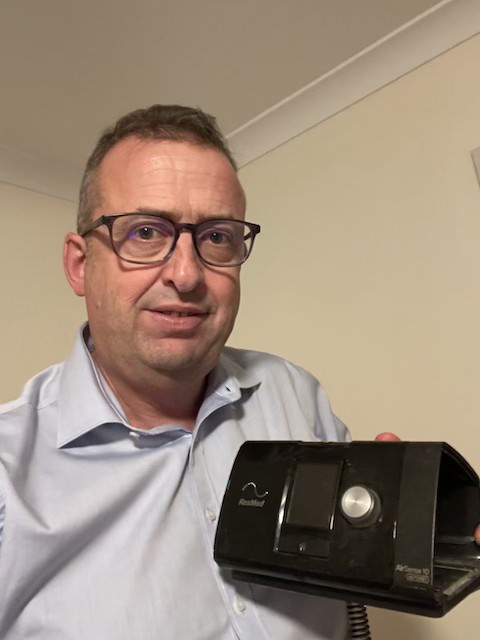
There’s a very specific moment — somewhere between 2 and 4 in the morning — when your CPAP decides to fire a small spray of lukewarm water directly up your nose. The first time it happened to me, I sat bolt upright in the dark, absolutely convinced my machine was leaking or my humidifier tank had split open. It wasn’t broken. It was physics. I just didn’t know it yet.
That was roughly twelve years ago. Since then, I’ve lived with rainout through Perth summers where I ran the aircon so hard the bedroom felt like a meat locker, and through cooler months where I’ve wrapped my hose under the doona like it was a sleeping baby. I’ve tried the two-dollar fixes and the ones that cost the better part of a hundred bucks. I’ve also watched a few friends quietly give up on CPAP entirely because no one ever sat them down and explained what was happening or how to stop it.
So this isn’t a listicle. This is the guide I wish someone had handed me that first morning I woke up with a wet face, wondering if my machine was trying to drown me.
What rainout actually is (and why it isn’t dangerous)

“Rainout” is the nickname CPAP users have given to the condensation that forms inside your hose and mask overnight. Your CPAP humidifier heats water and sends warm, moist air down your tube. When that warm air meets a cooler surface — the inside wall of your hose, the silicone cushion of your mask, even the plastic of your machine outlet — the moisture drops out of the air and becomes liquid water. Exactly the same way a cold glass of beer “sweats” on a warm afternoon, except in reverse: inside your tube, the moist air is the warm thing and the tube wall is the cool thing.
You can’t really stop the physics from happening. The dew point is the dew point. What you can do is make sure you never reach it inside the tube, and that’s what most of the fixes in this article are quietly doing.
The good news is that rainout isn’t dangerous. You can’t drown from it — the volumes of water involved are tiny, even when it feels dramatic. What it can do is disrupt your sleep, break your mask seal (so your therapy pressure drops off), and create a small puddle in your cushion that’s a lovely home for bacteria if you’re not cleaning properly. I also know people who’ve quietly abandoned CPAP because of rainout alone, and that’s the real harm here — untreated sleep apnea is dangerous. Rainout is just annoying, but it can become the straw that breaks the camel’s back for people already struggling to adjust to therapy.
The Sleep Foundation notes that heated tubing specifically exists to “help keep the air warm and prevent heavy condensation in the tubing, also known as rainout” — it’s a common enough problem that the entire industry has engineered hardware around fixing it.
Why it happens to some of us and not others
Rainout isn’t random, and it isn’t a sign that your machine is faulty. It comes down to three ingredients that almost always appear together:
The first is a warm, generous humidifier setting. The harder you run your humidifier, the more water vapour is loaded into the air stream, and the less cooling it takes before that vapour drops out as liquid. If your humidifier is cranked to its highest setting, you’re basically creating a small tropical storm and asking the hose to deliver it to your face without anything raining out along the way.
The second is a cold bedroom. I’m a cold sleeper. I like the room around 18°C (roughly 64°F), which is well below what most CPAP humidifiers are designed around. If your bedroom is significantly cooler than the air coming out of your humidifier, the hose walls will sit at or near room temperature, and the temperature differential creates perfect condensation conditions along the whole length of the tube.
The third is standard (unheated) tubing. A plain plastic hose has no way to hold the warmth of the air inside it. Heat radiates straight out into the room and takes only seconds to cool. By the time the air reaches your mask — and it travels a surprisingly long way, because the standard hose is six feet — it may have dropped several degrees, which is more than enough to cross the dew point.
Warm wet air plus cold surfaces equals water. Every time. There’s no amount of “willing it not to happen” that gets around this.
Seasonal changes matter too. A humidifier setting that was perfect for you in summer can cause rainout every night once winter rolls around, because your bedroom is five degrees colder and your skin is drier so you’ve pushed the humidity up. People often assume something has broken when the calendar, not the machine, is what changed.
The actual impact on your therapy
This part gets glossed over in most articles, and it matters. When rainout happens, a few things go wrong at once:
Your sleep fragments. You may not fully wake up, but you’re pulled out of deep sleep every time the gurgling starts or the cold water hits your skin. That’s exactly what CPAP is supposed to prevent. Small, recurring irritations of this kind are strongly associated with people reducing nightly use under the four-hour compliance window, which is the threshold most insurers and sleep specialists watch.
Your mask seal fails. A cushion half-full of water doesn’t sit right on your face — here’s a fuller piece on why CPAP masks leak, but rainout is a common hidden cause. You hear the hiss, the pressure drops, and now you’ve got therapy that’s no longer delivering the prescribed pressure.
Your hygiene takes a hit. Standing water in a warm silicone cushion is a lovely environment for mould and bacteria. This is the reason you’ll see experienced users dump and air-dry everything every morning, not just once a week.
And the one that worries me most: people quietly give up. Every time I talk to someone who “tried CPAP and couldn’t tolerate it,” there’s a surprisingly good chance that rainout (or dry mouth, which is related) was the specific thing that broke them. That’s a real loss, because the underlying sleep apnea is still doing damage.
The fix that actually changed my life: heated tubing
If I could go back and buy one thing the first week of my CPAP journey, it would be heated CPAP tubing.
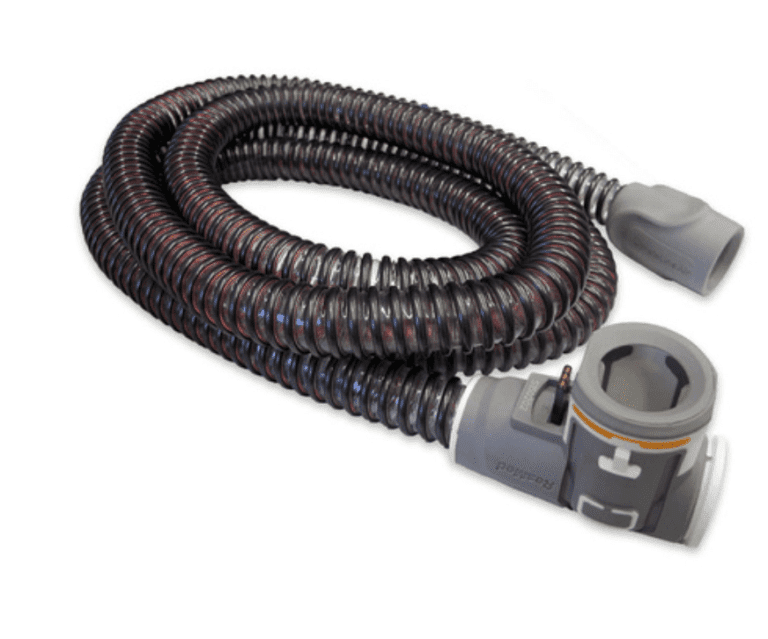
Heated hoses contain a thin resistive wire that warms the tube wall gently along its entire length. Your machine coordinates the hose temperature with the humidifier temperature so the air arriving at your mask is still warm, still moist, and still above the dew point of the tube wall. That’s the whole game. Keep the tube wall a little warmer than the vapour, and condensation simply can’t form.
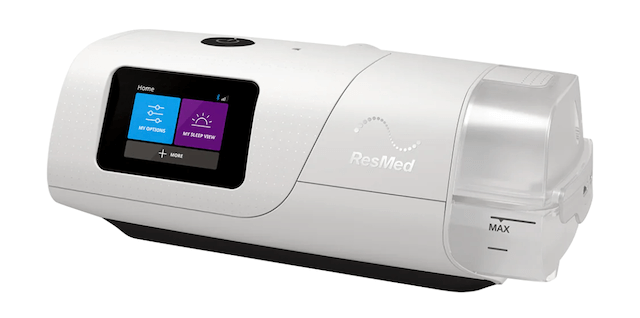
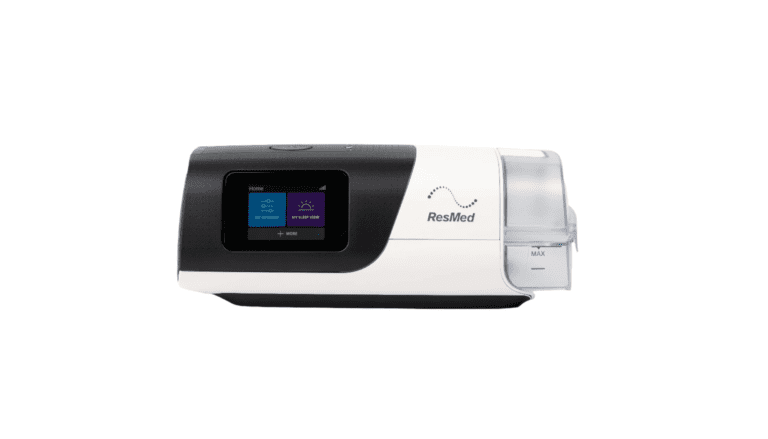
I run a ResMed machine and use the ClimateLineAir hose. When I switched, I went from waking up twice a night with a gurgling tube to forgetting what rainout even felt like. Within 2 weeks my compliance numbers had jumped, and my partner noticed I’d stopped fiddling with the mask in the small hours. The American Sleep Apnea Association’s guide to CPAP humidification calls this out specifically: heated tubing is “especially helpful in preventing rainout.”
Heated tubing isn’t cheap. A genuine ClimateLineAir runs around the $60–90 mark, depending on where you are in the world, and third-party heated hoses tend to sit in a similar range. But I’d argue it’s the single best dollar-per-night investment I’ve made in my therapy, bar the machine itself. If you’re still using a standard unheated hose after more than a few months of CPAP, this is the upgrade to make first. The tricky part is matching the right hose to your machine — the ClimateLineAir for the AirSense 10 won’t fit the 11, and DreamStation users need a different hose again. I’ve pulled together the specific models I trust, broken down by machine, in my full roundup of the best CPAP hoses — it’ll save you the compatibility headache I went through sorting this out the first time.
One warning, though: heated tubing doesn’t make rainout impossible. It makes the tube walls warm, but it doesn’t heat your mask. If your humidifier is maxed out and your bedroom is genuinely cold, you can still get condensation in the mask chamber itself, because the mask has no heating element. I’ll come back to that.
The other fixes, in the order I’d actually try them
If heated tubing isn’t on the cards right now — budget reasons, compatibility reasons, you just want to try the free stuff first — there are several things that genuinely work. But be aware that each has a trade-off, which is something most articles skip.
Turn the humidifier down a notch or two. This is the free one, and it’s where I’d start. If you’re sitting at 6 (the maximum on most ResMed units), try 4. If you’re at 4, try 3. You’ll put less moisture in the air, so there’s less available to condense. The trade-off is real though: drop it too far and you’ll wake up with a mouth like the Simpson Desert, a sore throat, or in my case, nosebleeds during dry winter months. If you start getting any of those symptoms, you’ve overshot and need to come back up a notch.
Warm the bedroom slightly. I know, I know — nobody who loves a cool bedroom wants to hear this. But even two or three degrees of extra warmth can be enough to get above the dew point. You don’t have to sleep in the tropics; just don’t have the aircon set to Antarctic.
Use a hose cover. This is the middle-ground answer if heated tubing isn’t an option. A fleece CPAP hose cover acts like a dressing gown for your tube, slowing the rate at which heat escapes the air. It won’t fully eliminate rainout the way a heated tube will, but it’ll cut it down dramatically and costs a fraction of the price. Bonus: it also stops that cold plastic sensation when your tube touches your skin at night, and dampens the “whoosh” sound if the tube drags on your headboard. Some people even make their own out of an old hoodie sleeve, which genuinely works.
Drop the machine below your head level. This is my favourite trick because it’s free and it uses gravity. If your CPAP sits on a nightstand at mattress-height or higher, any condensation that forms in the hose has a clear path downhill into your mask. Move the machine to a lower shelf, or even the floor next to the bed, and water now runs the other way — back toward the humidifier chamber, where it belongs. Just watch out for pets who treat the machine as a chew toy.
Hang the hose overhead. Related to the gravity trick. Some people run their hose up and over a hook above the bed so the tube has an uphill-then-downhill shape. Water that forms mid-hose has to choose a direction, and most of it ends up running back toward the humidifier. A proper hose holder does this more elegantly than a DIY hook, and as a side benefit stops you from rolling onto the hose at night. I’ve managed to avoid needing one myself through careful machine placement, but it’s one of the most-asked-about accessories in my inbox, so I’ve pulled together the models worth considering if you want to go that route.
If you already have heated tubing and still get rainout
This used to happen to me in deep winter. The hose is warm, the humidifier is running, and you’re still getting a wet mask. Here’s what to check, in the order I’d check them.
First, what’s the hose temperature actually set to? Most modern ResMed machines let you adjust the hose temperature separately, usually somewhere between 60–86°F (roughly 15–30°C). If it’s on a low setting, it may not be enough to keep the tube above the dew point. Try nudging it up by one or two degrees.
Second, is your humidity too high relative to the hose temperature? These two settings have to be balanced. If humidity is maxed and hose temp is low, you’re asking the hose to hold more moisture than it can sensibly carry. Drop the humidity one notch, and see if that settles it.
Third, check for air leaks around your mask and hose connections. A slow leak of warm air cools the surrounding plastic faster than you’d think, and condensation forms in pockets near the leak. Inspect the cuffs where the hose joins the machine and the mask, and replace any seal that looks tired or cracked. While you’re at it, rule out mask fit issues — an ill-fitting mask leaks cold room air back into the system and drops the temperature at exactly the wrong spot.
Fourth, think about the mask itself. Full-face masks have a larger dead-air volume than nasal pillows, and that bigger chamber is unheated, so condensation can form there even when the hose is toasty. If you’re a full-face user who just can’t beat rainout, it’s worth considering whether a nasal pillow would work for you — though only if you’re a confirmed nose breather, which is a whole other conversation.
Finally, the humidifier’s auto mode (called Auto Climate Control on ResMed) is genuinely pretty good at managing this balance itself. If you’re running your machine on manual settings, switching to auto for a week and seeing what it chooses can teach you a lot about where your “sweet spot” actually is.
Cleaning and hygiene, quickly
One thing you’ll hear me bang on about: empty the hose every morning. Even if you don’t see water, a bit usually remains. Dangle the hose over the shower rail or a towel rack for ten minutes, and you’ll be amazed what drips out. If you don’t, the residual moisture combined with a warm room accelerates rainout the next night — and gives bacteria a head start.
And yes, always use distilled water in your humidifier chamber. I’ve written about why that matters here — but the short version is that tap water deposits minerals that degrade your chamber, and in some cases can create microbial issues if your water supply isn’t perfectly clean. Distilled water is cheap and it solves both problems.
If your rainout keeps producing puddles, you’re going to need to clean more often than the manufacturer’s default schedule recommends. A weekly warm-soapy-water wash of the hose and mask cushion is a reasonable baseline.
When rainout is actually a different problem in disguise
A last thought from twelve years of this: sometimes what people call rainout isn’t rainout. If you wake up with a wet mask every single night no matter what you try, and none of the above fixes touch it, look at the possibility that you’re drooling (more common with full-face masks and mouth breathers), that your mask is leaking air and the “wet” sensation is actually the cold draft, or that the chamber seal is worn and water is escaping directly from the humidifier base. This troubleshooting guide has more on sorting through the possibilities.
The bottom line
Rainout is one of those CPAP problems that feels much bigger than it actually is. It’s frightening the first few times — nobody signs up for sleep therapy expecting to be sprayed with water — but once you understand the physics and have a couple of tools in the toolkit, it becomes a non-issue. I go weeks at a time now without thinking about it, and I used to dread going to bed in winter.
If you take nothing else from this piece, take these three things: buy heated tubing if you haven’t already, put your machine lower than your head, and keep your humidifier settings modest rather than maxed out. Those three changes alone have solved the problem for the vast majority of people I’ve helped over the years.
You don’t have to put up with a wet face. You don’t have to quit CPAP. And you absolutely don’t have a broken machine — you just have physics, and physics is negotiable.
If you’ve been struggling with rainout and you’ve tried something that worked for you that I haven’t mentioned here, drop a comment below. The comment section on this blog has become genuinely useful over the years, and someone reading this at 3 am with a wet nose will thank you for it.
⚠️ MEDICAL DISCLAIMER This blog provides general information only and is not a substitute for professional medical advice, diagnosis, or treatment. Sleep apnea is a serious condition, and CPAP equipment should be used under proper medical supervision. Always consult your doctor or sleep specialist before starting, stopping, or changing any therapy. I share personal experiences as a CPAP user, not as a medical professional. Individual results vary. For medical guidance, please consult a qualified clinician or the American Academy of Sleep Medicine (aasm.org).