ResMed AirSense 12: What We Know So Far


There is a lot of speculation online about a ResMed AirSense 12. People are searching for it, online stores hint at it, and forum threads fill up with wish lists. So here is the honest version, written by someone who has run a ResMed AirSense 10 for the better part of a decade and is weighing an upgrade right now.
As of this update, there is no ResMed AirSense 12. ResMed has not announced one, has not published specifications, and has not given a release date. Anything presented as confirmed detail about an AirSense 12 is speculation. That has not changed, and it is worth saying plainly before going any further.
What has changed is more interesting than another round of rumors. ResMed recently put a genuinely new piece of technology into the hands of CPAP users, and it does not require a new machine at all. More on that below.
A quick note on who is writing this. My background is in computer science, not medicine. I am a long term CPAP user with severe obstructive sleep apnea, not a clinician. Nothing here is medical advice. What I can offer is a careful, patient’s eye reading of what is real, what is marketing, and what is simply made up.
Is there a ResMed AirSense 12?
No. Not yet, and possibly not for a while.
It helps to understand how ResMed actually releases machines. A CPAP is a regulated medical device, not a phone. The Sleep Foundation notes that the FDA regulates these machines as class II medical devices, which means new models and new features go through a clearance process before they reach patients. Companies do not ship them on an annual schedule, and they do not pre-announce them the way consumer electronics brands do.
History backs this up. The AirSense 10 arrived in 2014. The AirSense 11 did not follow until 2021. That is roughly a seven year gap. By that math, the people watching the calendar and expecting a 12 are not unreasonable, but they are also not working from any announced timeline. ResMed simply has not said anything.
There is also a commercial reality. The AirSense 10 is still sold new and still works well for a great many people, including me. The AirSense 11 is the current flagship. With two machines covering the market and very little direct competition, ResMed is under no pressure to rush a successor. When the gap between models is measured in years, the word “soon” is doing a lot of work in a sentence.
So if you came here hoping for a spec sheet, I cannot give you one, and neither can anyone else. What I can do is tell you what ResMed has actually done lately, because it answers the real question underneath most AirSense 12 searches. Is something better coming, and should I wait for it?
What ResMed actually released: Smart Comfort
Here is the real news. In late 2025 ResMed received FDA clearance for a feature it calls Smart Comfort, also referred to as Personalized Therapy Comfort Settings.
Smart Comfort is an artificial intelligence feature, and it is the part of the “future CPAP” conversation that has quietly become real. Instead of waiting for a new machine, ResMed built the intelligence into software. According to ResMed’s announcement, Smart Comfort uses machine learning trained on a very large set of de-identified, real world sleep data to recommend personalized comfort settings for a new user. It looks at information such as age, gender, and Apnea-Hypopnea Index, then suggests how gently the machine should ease someone into therapy, how gradually pressure should ramp up, and how much pressure relief to give on exhale.
Two details matter for anyone trying to decide whether to wait.
First, Smart Comfort runs on the AirSense 11. It is rolling out through the myAir app, beginning as a limited beta in the United States for new myAir users on an AirSense 11, with a wider rollout planned later. It is not tied to some unreleased machine. The “smarter CPAP” that people imagine for an AirSense 12 is, in its first real form, arriving on hardware you can buy today.
Second, Smart Comfort adjusts comfort settings, not prescribed therapy. It changes things like ramp behavior and exhale relief to make therapy easier to tolerate. It does not change the treatment pressure your doctor prescribed. That distinction is important, and it is the kind of thing a manufacturer gets cleared by the FDA precisely so the line stays clear.
One caveat is worth noting. The initial rollout is aimed at people who are new to therapy, because the feature is most useful when someone is first being eased onto a machine. If you already own an AirSense 11 and have been on therapy for a while, you may not see Smart Comfort appear in your myAir app right away. ResMed has described a broader rollout over time, so for existing owners, this is a feature to watch rather than something that arrives overnight. Either way, the point stands. The intelligence is being added to an existing machine through software, which is not how a brand-new model gets sold.
For me, this reframes the whole upgrade question. The headline feature people were hoping a future machine would deliver turned out to be a software update for the machine that already exists.
Why the AirSense 11 already does most of what people imagine
When you read AirSense 12 wish lists, most of the items are things the AirSense 11 already has.
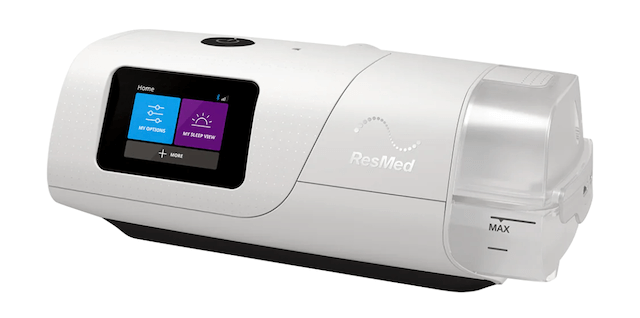
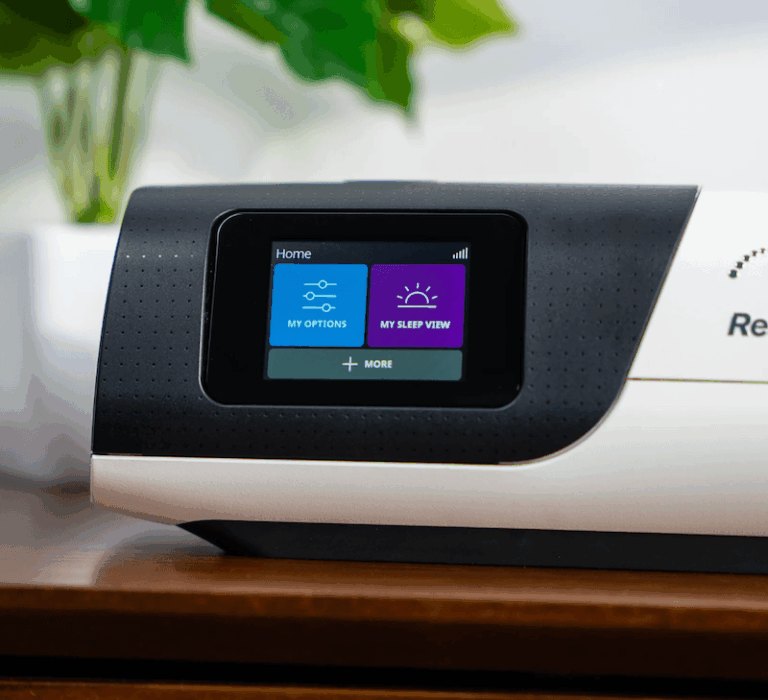
The AirSense 11 brought a touchscreen, Bluetooth connection to the myAir app, the ability to receive firmware updates over the air, and a slimmer design than the AirSense 10. It runs ResMed’s AutoSet algorithm, which automatically adjusts pressure through the night within a prescribed range. With Smart Comfort now arriving, it also gains the data driven comfort personalization that was, until recently, purely hypothetical.
I want to be honest about the AirSense 11’s weaknesses too, because pretending a current machine is flawless is how wish lists for imaginary machines get started. Two complaints come up repeatedly from AirSense 11 owners. The water tub has a reputation for being easy to spill if you are not careful when filling it or moving it. And the hose connects at the back of the machine, which makes it harder to sit the unit flush against a wall or a tight nightstand. Neither is a dealbreaker, but they are real, and a genuine AirSense 12 would presumably address them. If you want a fuller picture of living with the current flagship, I have written separately about AirSense 11 tips and a closer look in my AirSense 11 AutoSet review.
It is worth saying clearly. I have not switched to the AirSense 11 myself. I still run an AirSense 10, which I cover in my AirSense 10 AutoSet review. The 11 is on my shortlist, and writing this page is part of how I am thinking it through.
What about a tubeless or maskless CPAP?
This is the rumor that gets people most excited, so it deserves a straight answer.
You will find videos and posts describing a tiny, tubeless device worn under the nose, sometimes attached to a future ResMed model. It is an appealing idea. Anyone who has felt tethered to a hose, or has dealt with the kind of CPAP anxiety that a mask can trigger, can see the appeal of something small and discreet.
But here is the careful version. No mainstream manufacturer has brought a genuinely tubeless CPAP to market. Some of the most widely shared “tubeless ResMed” content online traces back to an April Fools’ Day video, not a product announcement. Treating that as a leaked roadmap is exactly the mistake this page exists to help you avoid.
There are also hard engineering reasons a tubeless CPAP is difficult. CPAP works by delivering a continuous, fairly precise air pressure. A device small enough to perch under your nose has to generate that pressure, manage carbon dioxide washout so you are not rebreathing your own exhaled air, and run quietly on battery power all night. Those are not minor details. They are the whole problem. Until a real manufacturer publishes real specifications and real clearance, a tubeless CPAP belongs in the column marked “interesting if it happens,” not the one marked “coming soon.”
Should you wait for the AirSense 12?
If you need CPAP therapy now, do not wait for a machine that has not been announced.
This is the part where my computer science background actually matters, because it taught me a healthy skepticism about roadmaps. Unreleased products slip, change, or never ship at all. Sleep apnea, on the other hand, does not pause politely while you wait. Untreated obstructive sleep apnea is linked to serious health consequences, and every night spent holding out for a hypothetical machine is a night without treatment. The decision is not really “AirSense 11 or AirSense 12.” It is “effective therapy now or no therapy now.”
If your current machine still works and you are simply curious, there is no harm in waiting and watching. That is roughly where I sit with my AirSense 10. It still does its job, so I am in no rush, and I would rather make the move to an AirSense 11 deliberately than buy on impulse.
If you are choosing a machine today, the AirSense 11 is the current flagship and a sensible default for most people, with the AirSense 10 still a dependable and often more affordable option. If you want to compare beyond ResMed, I keep a broader rundown in my guide to the best CPAP machines. Whatever you choose, it should be a machine you can actually get, set up, and start using, and it should match the prescription from your sleep specialist.
How to avoid AirSense 12 scams and pre-order traps
Because there is search demand for the AirSense 12, there are also listings trying to profit from it. Be cautious.
If an online store, marketplace seller, or eBay listing claims you can buy or pre-order a ResMed AirSense 12, treat it as a red flag. ResMed has not released this machine, so nobody has legitimate stock of it and nobody can take a real pre-order for it. A listing that says otherwise is, at best, mislabeling an AirSense 11, and at worst, taking money for something that does not exist.
A simple rule keeps you safe. Until ResMed publishes an official announcement on its own website, assume the AirSense 12 is not available. Real CPAP machines also require a prescription, so any seller offering to skip that step is another reason to walk away.
What I will do when there is real news
I will update this page when ResMed actually announces something, not when a rumor makes the rounds.
If a real AirSense 12 is announced, this is where I will cover what is genuinely confirmed, how it compares to the AirSense 10 and AirSense 11, and whether it is worth the upgrade for someone like me who has used ResMed machines for years. Until then, the honest summary is this. There is no AirSense 12. The most meaningful recent step forward, Smart Comfort, is software arriving on the AirSense 11. And the best machine is the one you can buy and use tonight, under the guidance of your doctor.
If you have a feature you genuinely hope to see in a future ResMed machine, I would like to hear it. Leave a comment below.
⚠️ MEDICAL DISCLAIMER This blog provides general information only and is not a substitute for professional medical advice, diagnosis, or treatment. Sleep apnea is a serious condition, and CPAP equipment should be used under proper medical supervision. Always consult your doctor or sleep specialist before starting, stopping, or changing any therapy. I share personal experiences as a CPAP user, not as a medical professional. Individual results vary. For medical guidance, please consult a qualified clinician or the American Academy of Sleep Medicine (aasm.org).