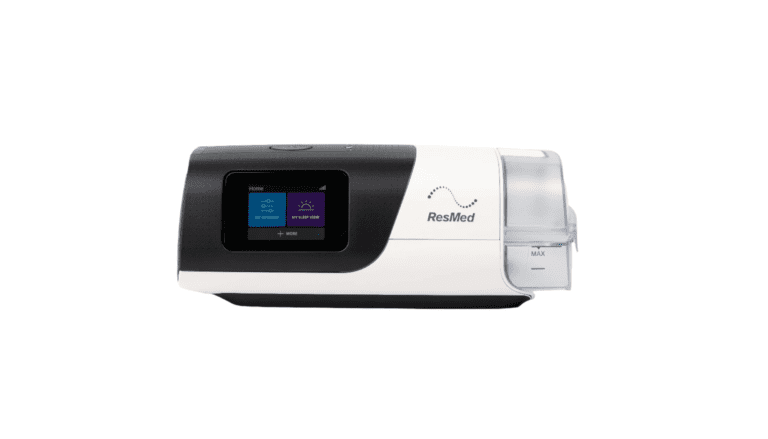
How Long Does a CPAP Machine Last? From a Long-Term User

“This post contains affiliate links. I may earn a commission if you buy through these links, at no extra cost to you. Read my Disclaimer for more details.”
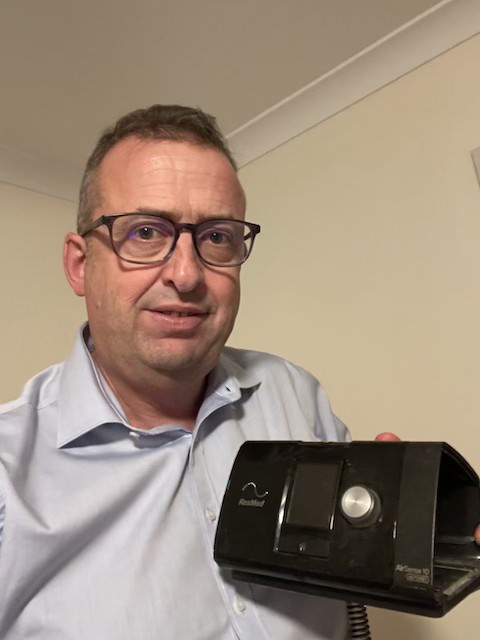
The filter door on my current ResMed AirSense 10 cracked and broke off the housing after years of nightly use. I have been holding it in place with a small piece of tape ever since.
A lot of people would see that and worry. Is the machine dying? Does it need to be replaced right away? I did not worry, because by the time it happened, I had already been through one machine and learned the difference between a problem that matters and a problem that only looks alarming. That broken filter door is a good way into this whole topic, because it shows that the lifespan of a CPAP machine is not really a single number of years. It is a question of what is actually failing and whether that failure touches your therapy.
I have used CPAP for more than a decade for severe obstructive sleep apnea, across two ResMed AirSense 10 machines. My background is in computer science, not medicine, so please treat everything here as one patient’s experience plus research I could verify, not as medical advice. If you want the full story of how I ended up on CPAP in the first place, that lives on my living with sleep apnea page. This guide is narrower. It is about how long these machines really last, what wears them out, and how to tell the difference between taping something up and going machine shopping.
The honest answer: five to seven years, with a large asterisk
When manufacturers, suppliers, and insurers talk about CPAP lifespan, they usually land on five to seven years. That figure is reasonable as a planning number, and it lines up with how insurance replacement schedules are written. But it is an average, and an average hides a lot.
A useful piece of real data comes from a study of a government CPAP loan program in Queensland, Australia, published in the Journal of Clinical Sleep Medicine. Researchers reviewed more than nine thousand machines and found a median lifespan of 15,178 hours of use and 12.4 years of age. The same study made the point that early failures still happen and vary between models, so any program managing CPAP equipment should plan for some machines to fail well before that median.
Notice that two different timeframes are in play there. Twelve years of calendar age in a managed loan program is not the same as the five to seven years a heavy nightly user at home should expect. The reason both numbers can be true is the asterisk: a CPAP machine ages by hours of work, not by dates on a calendar. A machine that sits idle most of the week will outlast one that runs eight hours every single night, even if they were bought on the same day.
So the most honest answer to “how long does a CPAP machine last” is this. Plan around five to seven years if you use it nightly. Expect the possibility of an earlier failure. And know that a well-treated machine can keep going past that window if it is still delivering pressure properly.
What actually determines how long your machine lasts
Think of your CPAP the way you would think of a car. A vehicle with two hundred thousand miles has done more work than one with fifty thousand miles, regardless of the model year on the registration. The same logic decides how long your machine has left, and a handful of factors do most of the deciding.
The first is simply how many hours you put on it. A motor and blower running nightly accumulate wear steadily, and motor bearing wear is one of the most common reasons a machine finally reaches the end of its life. This is mechanical, not mysterious. The more compliant a CPAP user you are, and you should be a compliant one, the faster you move toward that natural replacement point. That is the trade you want to make. The therapy is the priority, and the machine is the consumable.
The second factor is maintenance, and here I want to be measured rather than preachy. Reasonable upkeep does extend the life of the equipment. Washing the mask keeps skin oils from degrading the silicone, which is mostly a mask longevity issue but a real one. Keeping the humidifier chamber free of mineral scale protects the heating element. Replacing or cleaning the air filter on schedule keeps the motor from straining against restricted airflow. And keeping water out of the main body of the machine is non-negotiable, because moisture in the wrong place can kill a motor quickly. None of that requires a daily teardown or an expensive gadget. A realistic routine does the job.
The third factor is the environment the machine lives in. Dust is the quiet one. Particles get pulled toward the filter and motor housing, and over time that adds resistance, which makes the motor work harder and run warmer. A clean bedroom and a machine kept up off the floor on a nightstand rather than on the carpet will both reduce how much dust the machine has to breathe. Heat matters too. A CPAP left in a hot car or sitting in direct sun can warp its housing and stress its internal parts, so it is worth being careful where the machine sits and how it travels.
The fourth factor is a mix of model differences and plain luck. The Queensland study found genuine differences in survival between models, though much of that was explained by usage rather than build quality. And some machines simply fail early for no fault of the owner. That is exactly what manufacturer warranties exist for. Warranty terms typically cover defects in materials and workmanship for the first couple of years, so it is worth knowing your machine’s warranty window and following the manufacturer’s care instructions so you stay eligible if something goes wrong.
How I have gotten a full run out of my machines
My first AirSense 10 ran for about five years before the motor started making a grinding noise that no cleaning or filter change could fix. That was a bearing reaching the end of its life, and it was a clear signal rather than a guess. My current AirSense 10 is the one with the taped filter door, and aside from that cosmetic annoyance it is still doing its job every night.
I am not a maintenance perfectionist, and I would not pretend otherwise. What I do is consistent rather than obsessive. I wash my ResMed AirFit F20 full face mask regularly, since as a chronic mouth breather a full face mask is the only kind that has ever worked for me. I keep the humidifier chamber clean. I change the disposable filter on a schedule. I follow the cleaning steps ResMed actually recommends rather than inventing my own. I keep the machine level and off the floor. And when something starts to sound or feel different, I pay attention to it early instead of ignoring it for months. That last habit is the one that matters most, because it turns a sudden failure into a planned replacement.
One thing I deliberately do not do is use ozone or UV cleaning machines. The United States Food and Drug Administration has not cleared ozone or UV based CPAP cleaners as safe and effective, and ozone in particular has been linked to adverse reports. There is also no good reason to take that risk when mild soap and water does the job. I have written more about that in my piece on self cleaning CPAP machines.
Real signs it is time to replace, and false alarms that are not
After more than a decade, I have learned to sort CPAP problems into two piles. One pile means the machine is genuinely finished. The other pile looks scary but is not.
The clearest sign that a machine is done is a change in motor noise. New sounds, especially a grinding that was not there before, usually point to a worn motor bearing. That was the end of my first machine. The whir became a grind, and once that starts there is no cleaning your way out of it. A second genuine warning is a real drop in therapy quality. If snoring returns, daytime sleepiness creeps back, or morning headaches show up, and your machine’s data shows it is not holding the prescribed pressure, that deserves attention. Rule out a leaking mask and a tubing problem first, because those are far more common, but if the machine itself is not maintaining pressure the internal sensor or motor may be failing. The third genuine sign is a power problem. A machine that will not turn on, shuts off during the night, or behaves erratically is showing a power supply or control board fault, and once a machine is several years old, replacement usually makes more sense than repair. Physical damage to the main body, especially water damage, falls in the same pile.
The false alarms are worth knowing too, because they save you money and stress. A broken filter door, like mine, is annoying and not a therapy problem at all. Mask trouble, whether leaks, discomfort, or skin irritation, almost always points to the mask rather than the machine, and masks are meant to be replaced regularly anyway. A humidifier issue does not mean the whole machine is finished, since chambers can be replaced on their own and many machines will run without the humidifier if you need them to. And rainout, the condensation that collects in the tubing, is a settings and environment issue, usually solved by adjusting humidity or using heated tubing properly, not a sign of machine failure. If you want the wider picture, I keep a general guide to troubleshooting CPAP problems as well.
How replacement coverage usually works
This is one of the most common questions readers ask, so it is worth covering clearly. I want to be upfront first. I am an Australian CPAP user, so I have not personally navigated the United States Medicare system. What follows is a plain summary of the published rules, offered because so many readers are asking about them, not a personal account.
In the United States, Medicare treats a CPAP machine as durable medical equipment under Part B, and assigns it a reasonable useful lifetime of five years. In practice that means Medicare will generally cover a replacement once a machine has been in continuous use for those five years, provided a doctor documents that the therapy is still medically necessary and still helping. After meeting the Part B deductible, the standard cost split is eighty percent covered and twenty percent paid by the patient as coinsurance. Replacement before the five-year mark is limited to specific situations, mainly a machine that is lost, stolen, or damaged beyond repair by a particular incident, and that requires documentation. Wanting a newer model is not a qualifying reason. Private insurance plans often follow a similar five-year pattern, but the details vary, so anyone relying on private cover should check their own policy for replacement frequency, preferred suppliers, and cost sharing.
Two practical points come out of this. First, the five-year schedule is not arbitrary. It reflects the same five to seven-year durability range that the rest of this guide describes. Second, coverage usually allows one machine in that window, which matters if you are weighing a travel machine as a primary device. For readers outside the United States, replacement pathways differ by country, so it is worth checking your national or state equipment scheme and your private health cover rather than assuming the Medicare rules apply.
Travel machines are a slightly different story
I use a ResMed AirMini for travel and for camping, because hauling a full size machine and distilled water around is not realistic on the road. A compact travel CPAP is a genuinely good thing to own if you move around. It is also worth knowing that travel machines tend to lead a harder life than a home unit. They get packed and unpacked, carried through changing temperatures, and jostled in luggage, and that physical stress adds up in a way that a machine sitting on a nightstand never experiences.
So if you travel often, expect your travel machine to show wear sooner than your home machine would for the same number of hours. That is not a defect, just the cost of portability. If you want the practical side of taking a machine on the road, I have written separately about the best way to travel with a CPAP and about how to camp with a CPAP machine, and I cover the AirMini itself in more detail on my travel machine page.
Upgrade, or replace like-for-like
When a machine reaches the end of its life you face a small decision. Do you buy the same model again, or move up to newer technology? Newer machines tend to offer quieter motors, smoother humidification, more detailed sleep data, and easier wireless syncing of that data to your clinician. Those are real conveniences. Whether they are worth it depends entirely on you.
When my first machine failed, I chose another AirSense 10, because it was familiar and it worked, and at that point I did not see a reason to change. My current machine is getting on in years now, and for the first time I am genuinely weighing the AirSense 11 as the next step. The honest framing is this. If your current machine meets your needs and you are comfortable with it, replacing like for like is a perfectly sensible choice. If you have struggled with comfort or compliance, the newer comfort features are more likely to earn their place. The newest model is not automatically the right model. The right model is the one you will actually use every night. If you are starting that comparison from scratch, my roundup of the best CPAP machines is built for exactly that.
What to do with your old machine
When you do replace a machine, the old one should not just go in the bin. A CPAP is an electronic device and belongs in an electronics recycling stream, the same way you would handle an old computer or phone. If the old machine still works fully, it can serve as an emergency backup, though a machine that already had a failing motor is not a backup worth keeping. Some charitable and assistance programs accept gently used machines in good condition, which is a genuinely worthwhile destination for equipment that still has life in it. Passing a machine directly to another person is trickier than it sounds, because CPAP is prescribed therapy. Anyone using it needs their own prescription and their own clinical guidance, so a hand me down machine is only a starting point, never a substitute for being properly assessed.
The bottom line
After two machines and more than a decade of nightly therapy, here is what I am confident about. The five to seven year estimate is a fair planning figure for a nightly user, and my first machine landed right in that range. Maintenance matters, but a sensible routine beats an obsessive one, and expensive sanitizing gadgets are neither necessary nor clearly safe. Replacement schedules from insurers line up with the real durability of the hardware, so it is usually easier to work within them than to fight them. And when a machine is truly finished you will know, because motor noise, pressure failure, and power problems are unmistakable in a way that a cracked filter door simply is not.
In the end the machine is a tool. Its job is to deliver the pressure that keeps your airway open and treats your obstructive sleep apnea night after night. As long as it is doing that job well, the date you bought it matters far less than people think. My taped up filter door is proof enough of that. The machine is not pretty, but it works, and working is the whole point.
References
- Hukins C, Duce B. Asset life span in a government-funded CPAP device program. Journal of Clinical Sleep Medicine. 2021;17(3):375-380. https://jcsm.aasm.org/doi/10.5664/jcsm.8862
- U.S. Food and Drug Administration. Do You Need a Device That Claims to Clean a CPAP Machine? https://www.fda.gov/consumers/consumer-updates/do-you-need-device-claims-clean-cpap-machine
- Sleep Foundation. How Long Does a CPAP Machine Last? https://www.sleepfoundation.org/cpap/how-long-does-a-cpap-machine-last
- Sleep Foundation. Does Medicare Cover CPAP Machines? https://www.sleepfoundation.org/cpap/does-medicare-cover-cpap-machines
- Medicare.gov. Continuous Positive Airway Pressure (CPAP) devices. https://www.medicare.gov/coverage/continuous-positive-airway-pressure-devices
⚠️ MEDICAL DISCLAIMER This blog provides general information only and is not a substitute for professional medical advice, diagnosis, or treatment. Sleep apnea is a serious condition, and CPAP equipment should be used under proper medical supervision. Always consult your doctor or sleep specialist before starting, stopping, or changing any therapy. I share personal experiences as a CPAP user, not as a medical professional. Individual results vary. For medical guidance, please consult a qualified clinician or the American Academy of Sleep Medicine (aasm.org).