How to Stop Snoring: A Comprehensive Guide to Better Sleep

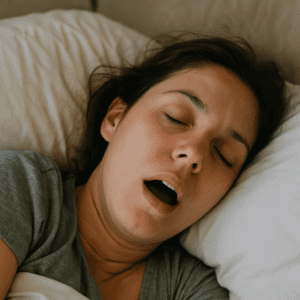
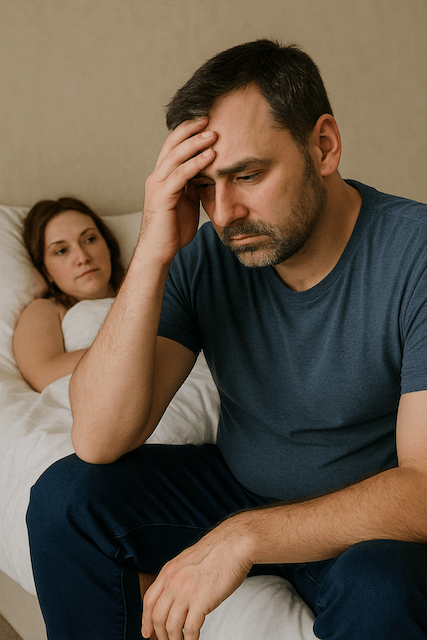
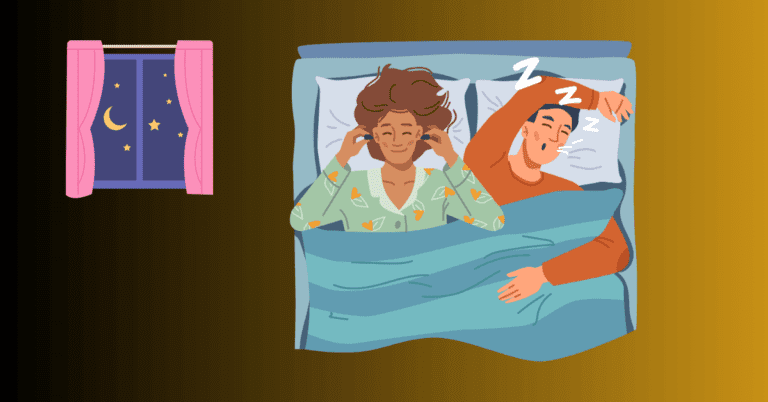
I used to snore like hell. That’s not an exaggeration. My wife would nudge me awake in the night, and I’d roll over and apologise, and within minutes I’d be at it again. I genuinely thought it was just one of those things. A bit embarrassing, maybe, but harmless. What I didn’t know was that snoring was the least of my problems.
It wasn’t until about ten years ago that I was diagnosed with obstructive sleep apnea. My snoring wasn’t just loud; it was a symptom of something much more serious going on while I slept. My airway was repeatedly collapsing. I was waking up dozens of times a night without knowing it. The snoring was basically my body’s way of fighting to keep breathing.
That diagnosis changed everything for me. And if you’re here because you snore and want to know how to stop, I’d gently say: make sure you know why you’re snoring first. Because the answer to that question changes everything about what you should do next.
Why People Snore
Snoring happens when airflow through your throat is restricted while you’re asleep. The soft tissue in your airway vibrates as air forces its way through a narrowed passage, and that vibration is the noise. But the reason the airway narrows in the first place varies massively from person to person.
For me, sleep apnea was the root cause. The soft tissue in my throat was relaxing so much during sleep that it was completely blocking airflow. That’s what OSA does. The common causes of snoring can overlap with sleep apnea so much that it’s honestly difficult to know which is which without a proper assessment. If you snore loudly and consistently, please don’t skip that step.
Beyond sleep apnea, the other big contributors are things most people are at least vaguely aware of. Sleeping on your back is a huge one. Gravity pulls your tongue and soft palate backwards when you’re flat on your back, and that closes off the airway just enough to cause that familiar rumble. Nasal congestion does something similar from the other direction: if you can’t breathe through your nose properly, you default to breathing through your mouth, and mouth breathing during sleep is a reliable route to snoring. Alcohol before bed relaxes the throat muscles more than normal, making the tissue even more likely to collapse inward. And carrying extra weight around the neck and jaw puts pressure on the airway that isn’t there when you’re lighter.
I had several of these stacked on top of each other before I got diagnosed, which is probably why my snoring was so bad. I also had a deviated septum, which I’ve since had surgically corrected. But I’ll get to that.
Start with Your Sleeping Position
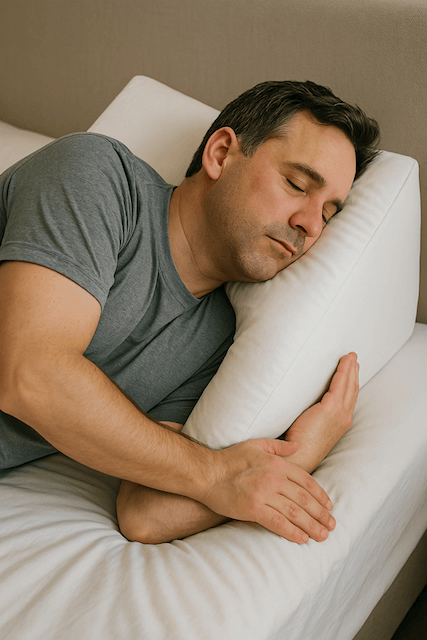
This is the cheapest and easiest thing to try, and for some people it genuinely makes a significant difference. If you’re a back sleeper, try training yourself to sleep on your side. I know that sounds simple to the point of being useless advice, but positional therapy for sleep apnea is a legitimate thing with real evidence behind it, and the basic version is just sleeping on your side.
The old trick of sewing a tennis ball into the back of your pyjamas still gets mentioned because it works for some people. A body pillow propped behind your back can achieve the same thing without the discomfort. The idea is just to make rolling onto your back uncomfortable enough that your sleeping brain avoids it. Over time, side sleeping becomes a habit on its own.
It won’t fix snoring caused by sleep apnea, because the problem there is structural, not positional. But for mild snoring or snoring that gets significantly worse on your back, it’s worth doing immediately.
Alcohol, Sleep, and Your Throat
I’m not going to lecture you on drinking. But I do want to be honest about what alcohol does to snoring, because I noticed a very clear difference in my own experience before I was on CPAP.
Nights when I’d had a drink, the snoring was noticeably worse. My wife told me the sounds were different too, more intermittent and gasping. That should probably have been a warning sign I took more seriously earlier. Alcohol relaxes muscles throughout your body, and the throat is no exception. The more relaxed those muscles are, the more likely the tissue is to vibrate or, in the case of sleep apnea, collapse entirely.
If you’re snoring regularly and you drink in the evenings, cutting that out, or at least moving it earlier in the day, is a sensible first step. It’s not a cure, but it can take the edge off.
Nasal Congestion and Breathing Through Your Nose
My septum was deviated, which meant one of my nasal passages was partially blocked pretty much all the time. I wrote about this in more detail in my deviated septum post, but the short version is that it was contributing to my mouth breathing during sleep and, by extension, to the snoring.
Before my septoplasty, I used nasal strips fairly regularly. They’re not a fix, but they do open up the nasal passages enough to make a difference. If you’re congested at night, whether from allergies, a cold, or structural issues like mine, nasal strips are worth trying. They’re cheap and you’ll know quickly whether they help.
Running a humidifier at night is another thing I’d recommend. Dry air irritates the nasal passages and the throat, which makes snoring worse. This is especially relevant if you use heating at night during winter, which tends to make the air in a room very dry. I’ve had a humidifier running alongside my CPAP for years, and I notice the difference when I travel without one.
Saline nasal rinses are also worth knowing about if you deal with regular congestion. A neti pot or a simple nasal spray with saline solution can clear out a lot of the accumulated irritants that narrow the nasal passages. It’s not glamorous, but it works.
Weight and the Airway
I want to be careful here because I know weight is a sensitive subject, and I’m not going to tell anyone what their body should look like. But I can speak from experience about the connection between the two.
Extra weight around the neck and jaw genuinely does compress the airway. The fatty tissue deposits around the throat apply pressure to an already narrow passage, and that narrows it further. In more severe cases, this becomes a serious medical condition, but even moderate extra weight in that area can contribute to snoring. The link between CPAP therapy and weight loss is also interesting from the other direction: being properly rested often makes it easier to manage weight, because exhaustion affects hunger hormones and motivation.
If your weight has increased and your snoring has got worse at the same time, that connection is probably real.
Anti-Snoring Mouthpieces
A mandibular advancement device, which is the technical name for an anti-snoring mouthpiece, works by shifting your lower jaw slightly forward while you sleep. That forward position keeps the airway from narrowing as much as it would otherwise.
You can buy these over the counter, and some people get on fine with them. A custom-fitted one from a dentist is more comfortable and tends to stay in place better, but it’s also considerably more expensive. If you’re exploring options before committing to something, a cheaper off-the-shelf version is a reasonable starting point.
These aren’t suitable as a replacement for CPAP if you have sleep apnea. I want to be clear about that because I’ve seen the two conflated. A mouthpiece can reduce snoring and may help with mild OSA in some cases, but it’s not treating the underlying condition the way CPAP does.
If You Smoke
I don’t smoke, but I know a lot of people with sleep apnea do. Smoking inflames the tissue in the airways, which makes everything worse: the snoring, the congestion, and if sleep apnea is present, the apneas themselves. Quitting is obviously easier said than done, but from a snoring perspective alone, the benefit of stopping is significant and fairly quick.
When Snoring Means You Need a CPAP Machine
This is where I have to be direct with you. If you snore loudly every night, if you wake up feeling unrested, if your partner has noticed you stopping breathing, gasping, or snorting yourself awake, please get assessed for sleep apnea before you spend any more time trying anti-snoring remedies.
I say this because I wasted years assuming snoring was just snoring. A sleep study would have revealed the problem much earlier. My AHI, the number of breathing disruptions per hour, was in the severe range by the time I was tested. That had been going on for years.
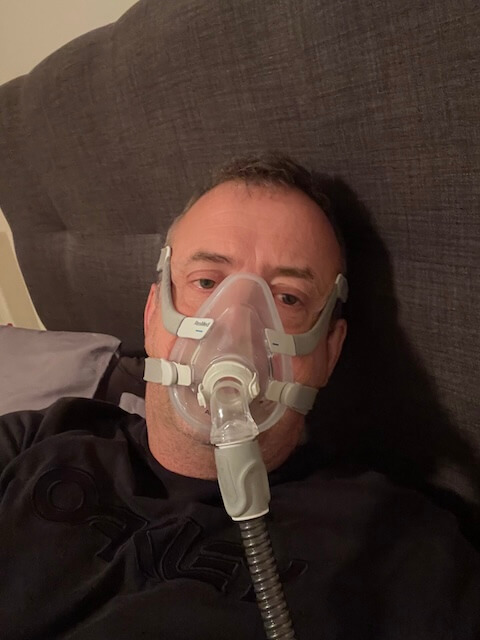
A CPAP machine doesn’t just reduce snoring. It treats the condition causing it. Mine stopped the snoring almost entirely from the first night. The process of using one takes a bit of getting used to, and there are adjustments to make in the first few weeks, but it genuinely changed my life. I’ve written extensively about my experience on this site if you want to go deeper on that.
Throat Exercises
This one tends to raise a few eyebrows, but there is something to it. Regularly exercising the muscles in your throat and tongue can reduce the likelihood of the tissue collapsing during sleep. Singing is probably the most commonly cited example, and studies have backed it up to some extent. Pronouncing vowel sounds deliberately, holding them and repeating them, works the same muscles. Pressing the tip of your tongue against the roof of your mouth and sliding it back is another one.
None of these is going to cure significant snoring on its own, but as a complement to other changes, it’s a low-effort thing to try.
When Surgery is on the Table
I’ve had septoplasty, which is surgery to correct a deviated septum. That was about improving nasal airflow rather than treating snoring directly, but the two were connected in my case.
If lifestyle changes and CPAP aren’t options or aren’t working, there are surgical routes worth knowing about. UPPP, which stands for uvulopalatopharyngoplasty, removes excess tissue from the throat to widen the airway. Somnoplasty uses radiofrequency energy to reduce the volume of soft tissue. The pillar procedure involves inserting small implants into the soft palate to stiffen it and reduce vibration.
These are specialist decisions and not ones to take lightly. But for people with chronic severe snoring who’ve exhausted other options, surgery can be genuinely transformative.
The Thing I Wish Someone Had Told Me Earlier
Looking back, the thing I really wish someone had said to me in my twenties is that loud, habitual snoring is not normal, and it’s not something you just live with. It can be a sign that something is wrong. It nearly always has a cause, and that cause nearly always has a solution.
If the snoring is yours, take it seriously. If it’s your partner’s, take it seriously. The tiredness, the morning headaches, the feeling of never quite being rested: those things don’t have to be permanent. For me, getting diagnosed and starting CPAP was genuinely one of the best things that ever happened to my health. I sleep properly now. That matters more than I can easily put into words.
⚠️ MEDICAL DISCLAIMER This blog provides general information only and is not a substitute for professional medical advice, diagnosis, or treatment. Sleep apnea is a serious condition, and CPAP equipment should be used under proper medical supervision. Always consult your doctor or sleep specialist before starting, stopping, or changing any therapy. I share personal experiences as a CPAP user, not as a medical professional. Individual results vary. For medical guidance, please consult a qualified clinician or the American Academy of Sleep Medicine (aasm.org).