CPAP Compliance: What It Really Means After More Than a Decade on Therapy


Doctors call it compliance. So does your insurer, your equipment supplier, and the small voice that asks whether last night really counted. After more than a decade with a ResMed AirSense 10 on the nightstand, I mostly just call it putting the mask on.
That sounds glib, but it points at something real. Compliance started as a clinical word and quietly spread into your insurance file, your prescription renewals, and the nightly data report waiting for you in the morning. It is worth understanding what the word actually means, why it matters well beyond keeping your coverage, and what staying compliant looks like over the kind of timeline a newly diagnosed person is usually quietly worried about.
A note on who is writing this. I am not a doctor. My background is in computer science. What I can offer is the view from the far side of the adjustment period: someone who was diagnosed with severe obstructive sleep apnea, an AHI of 51 at the time, started CPAP therapy, and has stayed on it ever since. On that scale, my breathing was being interrupted close to once a minute, so the difference between a treated night and an untreated one has never felt subtle to me. Compliance, in my actual daily life, has stopped feeling like a test to pass. It did not start that way, and it is not always clean.
The two definitions of compliance
There is a textbook number, and you will run into it fast. Most definitions put compliance at using the machine for at least four hours a night, on 70 percent of nights, across a rolling 30-day window. That is the threshold most United States insurers and Medicare use to decide whether they will keep paying for your equipment.
The first thing worth understanding is that this is a billing rule, not a medical one. It is the bar someone settled on to document that expensive equipment is actually being used rather than sitting in a closet. The mechanics of it, how the reporting works, what private insurers really require, and what to do when your report and your effort disagree, are a subject of their own. I have written all of that up separately in my guide to CPAP insurance compliance. If your immediate worry is keeping your coverage in place, start there, because that page is built to answer it.
This page is about the other definition. Not the one your insurer measures, but the one your body responds to. The four-hour rule keeps your file open. It does not, on its own, treat your sleep apnea. If you sleep eight hours and wear the mask for four, you have four hours of treated apnea and four hours of untreated apnea. The insurer is satisfied. Your cardiovascular system is not. Both definitions are real. They simply measure different things, and only one of them is the reason the therapy exists.
Why staying on therapy actually matters
Untreated obstructive sleep apnea is not a comfort problem. The reason CPAP exists, and the reason your doctor pushes you to stick with it, is that the consequences of leaving it untreated are serious over time. Most people grasp the daytime side because they have lived it: the fog, the short temper, the head nodding at a desk in the afternoon. The harder part to feel is the load on your heart. Your blood pressure, your heart rhythm, and your stroke risk are all affected by what happens to your breathing at night, and that strain does not disappear just because you got used to feeling tired. I have written about the link between sleep apnea and cardiovascular health on its own, and it is the part I would point you to first if you were ever tempted to treat the machine as optional.
The blunt version is this. When my AHI was 51, my body was being interrupted almost every minute of the night. CPAP does not half fix that. When the seal is good and the pressure is right, it brings that number down to a fraction of what it was, and the morning afterward is the proof. Compliance is just the unglamorous word for whether you are still getting that benefit or not.
What compliance looks like after years, not weeks
If you are newly diagnosed, here is the honest report from the other side.
My compliance has been steady. I put the mask on almost every night, and the exceptions tend to fall into one of two situations I will come back to. The reason it is steady is not willpower. I am not unusually disciplined. The reason is that the equipment works, and once the equipment works the habit stops being a decision you make each night.
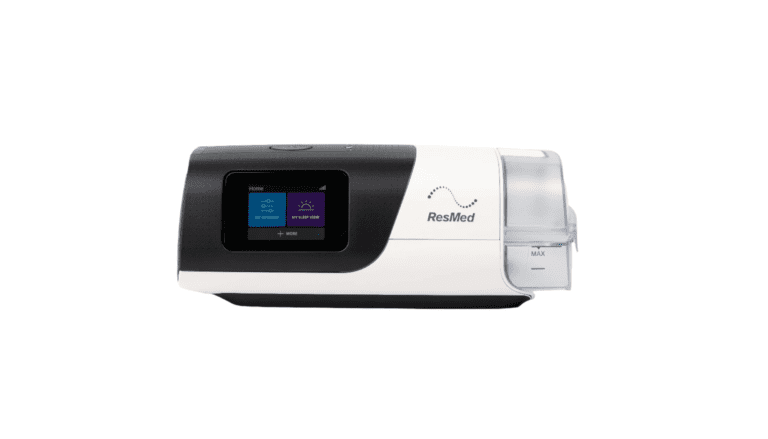
The ResMed AirFit F20 is the only mask I have ever used. I knew early that I needed a full face mask because I am a chronic mouth breather, and the F20 sealed well enough that I never went looking for an alternative. The AirSense 10 has been the machine for almost the entire run. My first one ran for years of nightly use before it wore out, I replaced it with another AirSense 10, and that second machine is the one I am on now. I am currently weighing an upgrade to the AirSense 11, but the older machine has never given me a reason to rush.
When the gear is dialed in, you stop thinking about it. The mask comes off in the morning and goes back on at night, and the data quietly accumulates. That is the version of compliance nobody warns you about during the uncomfortable first weeks: it can become almost invisible. It does not begin that way, which is a separate problem worth taking seriously, but it is where most people who stick with therapy eventually land.
The equipment does the heavy lifting
If you stripped out everything that did not matter and asked me what has actually kept me on therapy, the list is short, and none of it is about motivation.
A mask that fits comes first. I cannot overstate how much downstream compliance trouble is really upstream mask trouble. If the seal is bad, the data is bad, the sleep is bad, and eventually the habit collapses under the frustration. Getting the mask right in your first months is the single highest leverage thing you can do for the years that follow. For me a full face mask was the obvious answer as a mouth breather, and it has been the only type I have needed.
Working humidification comes next. Dry air at full pressure is its own specific misery, and the fix is the humidifier nearly every modern machine already ships with. I run mine year-round here in Perth. If your throat is raw in the morning, the odds are good that your humidifier setting is wrong, not your therapy, and I have gone deeper on getting that right in my piece on CPAP humidifier setup.
Then there is a daily data check. I open the myAir app every morning. It takes about ten seconds. I am not chasing a perfect score, and I am not anxious about the number. What I am doing is closing the smallest possible feedback loop on a therapy that runs while I am unconscious. If something drifts- a higher leak rate, a session that ended early, an AHI creeping up- I see it within a day instead of within a month. That habit, more than anything, is what catches small problems before they become reasons to skip a night. If you want more than the app summary offers, my walkthrough on how to interpret CPAP data covers what the numbers actually mean.
The last item is not equipment at all. It is accepting that this is permanent. The hardest mental shift for new users is realizing the mask is not a temporary fix. Once it becomes part of the bedtime routine the way brushing your teeth is part of the morning, compliance stops being a nightly choice. It just becomes what you do.
Where the numbers get messy
Steady is not the same as flawless, and it would be dishonest to pretend otherwise. There are two situations where my own numbers go sideways, and both are common enough that they happen to almost everyone eventually.
The first is being sick. A bad cold changes the whole equation. Breathing through a congested nose behind a full face mask is a different experience, and the seal breaks more easily when you are restless and clearing your sinuses. The right response in those weeks is not to grind through and call it a win. It is to manage your symptoms, do what you can with the equipment, and accept that the report is going to look rough for a little while. I have written more about using CPAP when you are sick, because the question comes up constantly and there are practical things you can do beyond toughing it out.
The second is a poor night of sleep that has nothing to do with the machine. Restless nights, anxious nights, hot nights. The mask is on, so the usage hours look fine, but the sleep underneath was thin. This is one of the quiet truths of long-term CPAP use that the data will never show you: the machine measures whether the mask is on, not whether you slept well. Those are two different questions, and a clean compliance report can sit on top of a night that was barely sleep at all. Knowing the difference keeps you from reading too much triumph, or too much failure, into any single morning.
Travel and camping do not have to break the streak
For a long time I assumed travel would be the thing that interrupted therapy, and for a while it was the part I worried about most. It turned out to be a logistics problem rather than a compliance one. I use a ResMed AirMini for trips and run it with the same F20 mask, so the routine travels with me instead of getting abandoned at the airport. Camping works the same way. The machine just comes along, and I have written separately about camping with a CPAP machine because the power and setup questions there are real but solvable. The point is that a few nights away from home does not have to mean a few untreated nights.
The four hour floor is not the goal
This is the line I would most want a newly diagnosed person to hold onto. Four hours a night on 70 percent of nights is the floor your insurer will accept. It is not the bar your body is asking you to clear.
The American Academy of Sleep Medicine’s clinical practice guideline for PAP therapy in adults frames the aim as regular, sustained use of the machine, with the real gains to daytime function, blood pressure, and quality of life coming from using it across your full sleep period rather than from clearing a minimum. After years of mornings, I can tell you the gap between a four-hour night and a full night is not subtle. Four hours keeps the file open. A full night of pressurized sleep is where I wake up feeling like myself. If you aim squarely at the insurance number, you will satisfy the rule and still feel tired, because the untreated hours do not stop counting just because the rest of the night was on the machine.
So treat four hours as something you pass on the way to a full night, not as a finish line. Compliance, the way most people use the word, measures the floor. The therapy works to the extent that you use it for as long as you actually sleep.
What I would tell someone in their first couple of months
If you are early in therapy and the word compliance is starting to feel heavy, here is what I would say from the far side of it.
The early months are the hard part, and almost everyone who stuck with CPAP went through some version of the discomfort you are in right now. The pattern I keep seeing is that the people who solve their equipment problems early are the people who quietly keep using the machine for years. Mask fit, humidification, and your ramp and pressure comfort settings are the levers worth pushing on. If the first weeks are mostly about anxiety rather than gear, my posts on overcoming CPAP anxiety and getting used to CPAP therapy cover what helped me through that stage.
After that, the habit takes care of itself. You stop talking yourself into it each night and just put it on, the way you set an alarm or lock the front door. The data accumulates. The mornings get clearer. Every so often you get sick or sleep badly and the report looks worse than usual, and that is fine, because compliance over years is never about any single night. It is about the trend.
That, in the end, is what the word really means once you are living it rather than reading about it. After more than a decade on the machine, my honest answer is most nights yes, a few nights compromised by a cold or a restless mind, almost no nights skipped entirely. It is not perfect. It is just steady, and steady is what keeps the therapy working. If you want the longer arc, the diagnosis story, and what life with sleep apnea actually settles into, my piece on living with sleep apnea is the right next stop.
⚠️ MEDICAL DISCLAIMER This blog provides general information only and is not a substitute for professional medical advice, diagnosis, or treatment. Sleep apnea is a serious condition, and CPAP equipment should be used under proper medical supervision. Always consult your doctor or sleep specialist before starting, stopping, or changing any therapy. I share personal experiences as a CPAP user, not as a medical professional. Individual results vary. For medical guidance, please consult a qualified clinician or the American Academy of Sleep Medicine (aasm.org).