Best CPAP Hose Holder: Stay Tangle-Free and Sleep Better

โ€œThis post contains affiliate links. I may earn a commission if you buy through these links at no extra cost to you. Read my Disclaimer for more details.โ€

If you’ve ever woken up with your CPAP hose wrapped around your arm, tangled in your sheets, or pulling your mask off your face, you’re not alone.

Hose management is one of those CPAP challenges that doesn’t get much attention during your initial setup, but it can make or break your therapy experience.

After 10+ years on CPAP therapy with my ResMed AirSense 10 and AirMini for travel, I’ve learned that small accessories can make a huge difference in sleep quality. While I don’t personally use a hose holderโ€”I’ve managed to make my setup work through careful machine placementโ€”I’ve researched this topic extensively because so many readers ask about it.

The right hose holder keeps your tubing elevated and out of the way, prevents mask seal disruption from tugging, and gives you freedom to move during sleep. Research shows that up to 46% of CPAP patients abandon therapy within the first year, and equipment frustrations like hose tangling contribute to that statistic.

In this guide, I’ll cover the best CPAP hose holders based on user reviews and design features, explain why proper hose management matters for therapy success, and help you choose the right option for your sleeping style.

Why You Need a CPAP Hose Holder

Your CPAP hose can easily become a sleep disruptor if itโ€™s not properly secured. Hose holders:

  • Prevent tugging that can break your seal
  • Keep the hose elevated and out of your way
  • Allow for better movement and freedom
  • Help with hose drying after cleaning

My Top 3 CPAP Hose Holders picks

๐Ÿฅ‡ 1. LONYEON CPAP Hose Holder

Best Overall for Versatility and Stability

Best CPAP Hose Holder

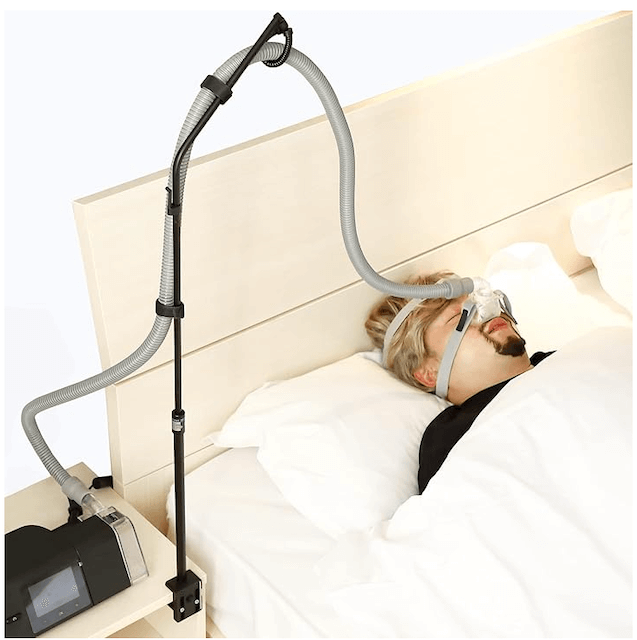
The LONYEON holder earns top marks for its flexible gooseneck design and weighted base. Unlike clip-on models that require specific bedframe configurations, this freestanding unit works on any nightstand or table.

Key Features:

  • Flexible gooseneck arm: Extends from 1.9 to 2.9 feet with 360ยฐ rotation, accommodating different bed heights and sleeping positions
  • Weighted base: Provides stability without mounting or clampingโ€”just set it on your nightstand
  • Rust-resistant construction: Made from aluminum and stainless steel for long-term durability
  • Travel-friendly: Folds down and packs into the included fabric bag for easy transport
  • Mask hook: Convenient hanging spot for your mask during daytime storage or after cleaning
  • Curly cord protection: Includes a protective coil to prevent hose wear

Best for: Anyone wanting a no-installation solution that works with any bed setup. Particularly good for renters who can’t mount hardware to walls or bedframes.

Considerations: The weighted base does take up some nightstand space (about 6 inches in diameter). If you have a very small nightstand, measure first.

Compatible with: All standard CPAP, BiPAP, and ASV machines, including ResMed AirSense 11, Philips DreamStation, and others.


๐Ÿฅˆ 2. PurePAP Tangle Free CPAP Hose Holder โœจ

Why I love it: This one has a good-looking looking simple design

The PurePAP takes a different approach with its under-mattress design. It’s lightweight, compact, and incredibly portableโ€”perfect for CPAP users who travel frequently.

Key Features:

  • Under-mattress installation: Slides between mattress and box spring for secure anchoring without visible hardware
  • Adjustable swivel arm: Moves smoothly to follow your position changes during sleep
  • Compact design: Takes up minimal space and maintains a clean bedroom aesthetic
  • Travel bag included: Folds flat and packs easily for tripsโ€”weighs less than a pound
  • Simple setup: No tools required; set up in under 2 minutes

Best for: Frequent travelers, minimalists who want invisible CPAP accessories, and anyone with limited nightstand space. Also excellent for CPAP camping trips.

Considerations: The under-mattress design requires a box spring or platform bed with space between the mattress and base. Won’t work with floor mattresses or some adjustable beds.

Stability note: While user reviews are generally positive, some heavier sleepers report that the PurePAP isn’t quite as sturdy as floor-standing models like the LONYEON.


๐Ÿฅ‰3. ALADUSA CPAP Hose Holder and Tubing Lift

Best Budget Option with Solid Performance

ALADUSA offers a similar under-mattress design to the PurePAP but at a lower price point, making it an attractive entry-level option for new CPAP users.

Key Features:

  • Triangle base design: Wide triangular base that tucks under mattress provides stable support
  • 360ยฐ rotating top: Swivels smoothly to accommodate movement without pulling on your hose
  • Foldable construction: Breaks down for travel and includes carrying bag
  • Mixed materials: Combines rust-resistant aluminum with durable plastic components
  • Universal compatibility: Works with CPAP, BiPAP, and APAP machines

Best for: Budget-conscious users, first-time CPAP patients testing out hose holders, and anyone wanting a simple under-bed solution.

Considerations: Some users report that the plastic components feel less premium than all-metal alternatives. The rotating mechanism can occasionally stick if not assembled properly.

Value perspective: At nearly half the price of the LONYEON, it’s a good way to determine if a hose holder helps your therapy before investing in a higher-end modeBest Budget Option with Solid Performance

ALADUSA offers a similar under-mattress design to the PurePAP but at a lower price point, making it an attractive entry-level option for new CPAP users.

Key Features:

  • Triangle base design: Wide triangular base that tucks under mattress provides stable support
  • 360ยฐ rotating top: Swivels smoothly to accommodate movement without pulling on your hose
  • Foldable construction: Breaks down for travel and includes carrying bag
  • Mixed materials: Combines rust-resistant aluminum with durable plastic components
  • Universal compatibility: Works with CPAP, BiPAP, and APAP machines

Best for: Budget-conscious users, first-time CPAP patients testing out hose holders, and anyone wanting a simple under-bed solution.

Considerations: Some users report that the plastic components feel less premium than all-metal alternatives. The rotating mechanism can occasionally stick if not assembled properly.

Value perspective: At nearly half the price of the LONYEON, it’s a good way to determine if a hose holder helps your therapy before investing in a higher-end model.


Why CPAP Hose Management Actually Matters

When you’re first diagnosed with sleep apnea and prescribed CPAP, the focus is usually on finding the right mask and getting comfortable with pressure settings. Hose management seems like an afterthoughtโ€”until it becomes a nightly problem.

The Real Impact of Poor Hose Positioning

Research published in Sleep Medicine Reviews shows that mechanical issues with CPAP equipment are among the top reasons patients struggle with therapy adherence. Here’s what happens when your hose isn’t properly managed:

Mask seal disruption: Every time your hose tugs on your mask, it breaks the seal. Even brief leaks can fragment your sleep and reduce therapy effectiveness. A study in the Journal of Clinical Sleep Medicine found that leak rates above 24 L/min significantly reduced CPAP efficacy and were associated with higher residual apnea-hypopnea index scores.

Pressure drop from kinks: When your hose gets bent or kinked, it creates resistance that reduces the actual pressure delivered to your airway. The American Academy of Sleep Medicine notes that even small pressure reductions can compromise treatment, potentially leaving apneas untreated during the night.

Restricted movement: Fear of pulling your mask off keeps you from moving naturally during sleep. Studies show healthy sleepers change positions 10-30 times per night, and restricting this natural movement can reduce sleep quality.

Therapy abandonment: Constant frustration with equipment leads to giving up. Research indicates that 46% of patients discontinue CPAP within the first year, with equipment-related issues playing a significant role in that decision.

How Hose Holders Solve These Problems

A properly positioned hose holder addresses all these issues by:

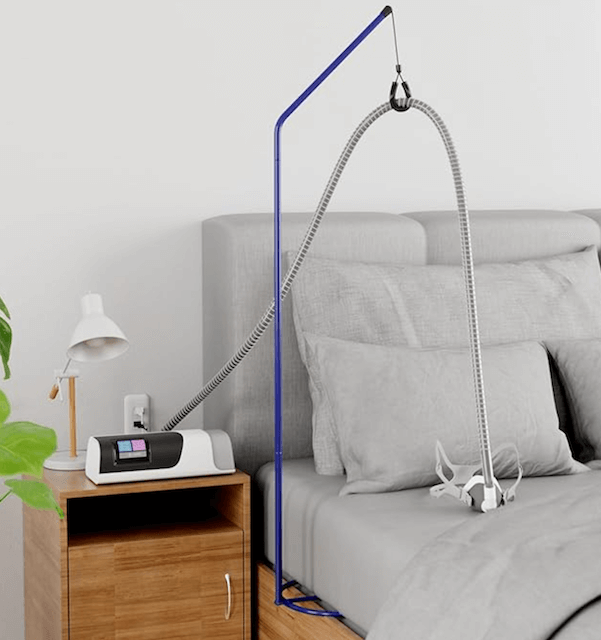
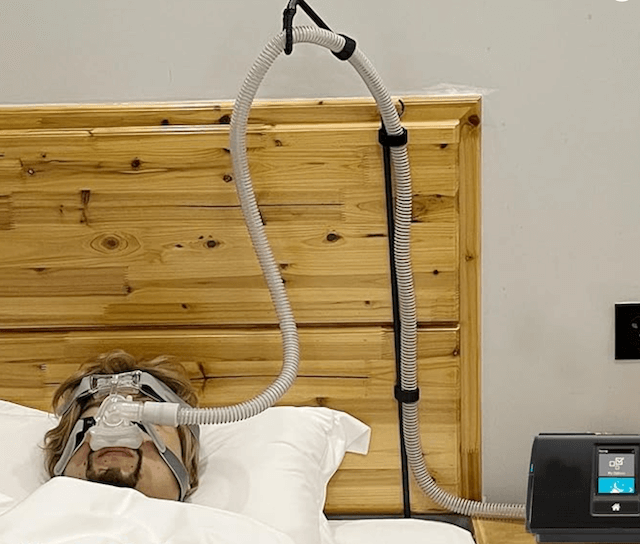
  • Keeping your hose elevated above the bed, preventing tangles with sheets or limbs
  • Reducing tension on your mask, maintaining a consistent seal throughout the night
  • Preventing sharp bends that restrict airflow and reduce delivered pressure
  • Allowing freedom of movement so you can sleep in your preferred position
  • Providing a convenient spot to hang your mask during the day for drying after cleaning

How to Choose the Right CPAP Hose Holder for Your Needs

With dozens of hose holders on the market, choosing the right one comes down to matching features to your specific situation. Here’s what to consider:

Your Bed and Room Setup

Nightstand space:ย If you have a small nightstand already crowded with yourย CPAP machine,ย distilled water, and other essentials, an under-mattress or floor-standing model makes more sense than a weighted base that needs surface area.

Bed type: Platform beds, adjustable bases, and floor mattresses limit your options for under-mattress holders. Traditional box spring setups offer the most flexibility.

Bedframe access: Can you mount hardware to your headboard or wall? If not, stick with freestanding options.

Room layout:ย Consider where your CPAP machine sits relative to your head. The hose holder needs to create a smooth arc from the machine to your mask without creating new kinks or bends.

Your Sleeping Style

Position changes:ย If you’re an active sleeper who moves frequently, you need a holder with a good range of motion. The LONYEON’s 360ยฐ rotation and SnuggleHose’s overhead suspension both excel here.ย Sleep positionย significantly affects mask comfort and therapy effectiveness.

Primary position: Side sleepers need holders that accommodate lateral hose movement. Stomach sleepers benefit from top-of-head hose routing if using compatible masks like the ResMed AirFit P30i.

Partner considerations: If you share a bed, choose a holder that doesn’t encroach on your partner’s space or create noise during position changes.

Travel Requirements

Do you travel frequently for work or pleasure? Consider whether you need a holder that packs down. The PurePAP and ALADUSA fold flat and weigh under a pound, making them perfect for your CPAP travel bag. For camping with CPAP, portability becomes even more crucialโ€”you might even want a holder specifically for travel while keeping a permanent solution at home.

Mask and Hose Compatibility

Most holders work with standard 6-foot hoses, but verify before buying:

  • Hose length: Standard 6-foot hoses work with any holder, but if you’re using an 8- or 10-foot extended hose, you may need different height adjustments
  • Heated tubing:ย If you useย heated CPAP tubing, ensure your holder won’t damage the heating element or power cord
  • Mask design: Top-of-head connection masks (like the AirFit P30i) versus front-connection masks affect optimal holder placement

Budget and Long-Term Value

Hose holders range from $20 to $60+. While it’s tempting to grab the cheapest option, consider durability:

Material quality: All-metal construction typically outlasts plastic components. Look for rust-resistant materials like aluminum or stainless steel.

Moving parts: Joints, swivels, and adjustments are failure points. Check user reviews for comments about mechanisms breaking or becoming loose over time.

Warranty: Some manufacturers offer 1-year warrantiesโ€”a good sign of quality confidence.

Cost per night: A $50 holder used nightly for 3 years costs about 5 cents per night. Compare that to one poor night’s sleep or, worse, abandoning CPAP therapy entirely.

Alternative Hose Management Solutions

Hose holders aren’t the only way to manage your tubing. Here are some alternatives and complementary accessories:

CPAP Hose Clips and Guides

Simple clips attach to your sheets or mattress edge, routing your hose along a specific path. They’re cheaper than full holders (usually $10-15) but offer less elevation and freedom of movement. Good for mild hose tangling issues rather than severe problems.

CPAP Pillows with Hose Cutouts

Specialized CPAP pillows feature cutouts and channels designed to accommodate your mask and hose. While primarily designed for mask comfort, they can also help with hose routing. Research in the journal Chest found that proper pillow support can reduce mask leak rates by up to 30%.

Hose Covers and Sleeves

CPAP hose covers add fabric padding that prevents rainout condensation and makes the hose less likely to catch on bedding. Some users find that the added bulk actually helps keep the hose more visible and easier to manage during position changes.

Strategic Machine Placement

Sometimes the solution is simpler than buying accessories. Experiment with your machine position:

  • Raise it higher on your nightstand to create natural elevation
  • Use a dedicated CPAP nightstand with built-in hose management features
  • Place it on the floor if your bed is very low
  • Position it closer to your head to reduce hose length and tangling potential

This is actually what I’ve done with my setupโ€”through trial and error, I found optimal machine placement that eliminated most hose issues without needing a dedicated holder.

Common CPAP Hose Problems and Solutions

Even with a hose holder, you might encounter these issues. Here’s how to troubleshoot:

Hose Pulling Mask Off During Night

Symptom: You wake up with your mask partially or completely dislodged, often with high leak alarms on your machine.

Solutions:

  • Verify your holder is positioned to create a gentle arc from machine to mask, not a straight line that creates tension
  • Check that your hose length is appropriateโ€”too short creates constant tension even with a holder
  • Consider switching to a top-of-head connection mask that reduces forward pull
  • Ensure your mask fits properlyโ€”poor fit can make you more susceptible to displacement

Hose Still Tangling Despite Holder

Symptom: Your hose gets wrapped around the holder arm or tangles with itself.

Solutions:

  • Add a hose cover to add bulk and reduce flexibility
  • Use hose clips at mid-points to guide the hose path more specifically
  • Adjust holder heightโ€”sometimes going higher creates better clearance
  • Switch to a shorter hose if you’re using an extended-length tube

Hose Kinking or Restricting Airflow

Symptom: You notice reduced pressure, increased breathing effort, or your machine shows pressure delivery errors.

Solutions:

  • Reposition your holder to eliminate sharp bends
  • Check for wear spots where the hose repeatedly bendsโ€”these areas lose flexibility and kink more easily
  • Replace your hose according to the manufacturer’s replacement schedule (typically every 6 months)
  • Consider upgrading to a more flexible hose material if your current tube is rigid

Noise from Hose Movement

Symptom: Rustling, scraping, or clicking sounds when you move during sleep.

Solutions:

  • Add padding where the hose contacts the holder
  • Use a fabric hose cover to muffle contact sounds
  • Check all connection pointsโ€”loose fittings can vibrate and create noise
  • Ensure your holder’s joints are properly tightened but still allow smooth movement

Proper CPAP Hose Care to Maximize Your Holder’s Benefits

A hose holder works best with a well-maintained hose. Here’s how to keep your tubing in optimal condition:

Weekly Cleaning Protocol

The American Academy of Sleep Medicine recommends cleaning your CPAP hose at least weekly to prevent bacterial growth and maintain airflow quality.

Basic cleaning steps:

  1. Disconnect your hose from both the machine and mask
  2. Fill a clean sink or basin with warm water and mild soap (avoid harsh detergents or moisturizing soaps)
  3. Submerge the hose and swish water through it gently
  4. Rinse thoroughly with clean water until no soap residue remains
  5. Hang to air dryโ€”this is where your hose holder becomes invaluable

Research published in the Respiratory Care journal found that proper hose hygiene reduces biofilm formation by up to 85%, which can improve therapy outcomes and reduce respiratory irritation.

Using Your Holder for Drying

Most hose holders double as excellent drying racks. After washing your hose, hang it from your holder to allow complete drainage and air circulation. This prevents mold growth and extends hose lifespan. Studies show that incomplete drying creates ideal conditions for microbial colonization, particularly in humid environments.

Drying tips:

  • Hang your hose vertically to encourage water drainage from both ends
  • Avoid direct sunlight, which can degrade plastic and silicone materials
  • Allow at least 4-6 hours drying time before next use
  • If you clean at night, consider having a backup hose for uninterrupted therapy

Replacement Schedule

Even with excellent care, CPAP hoses have a limited lifespan. Manufacturers typically recommend replacement every 6 months, but you may need to replace sooner if you notice:

  • Visible cracks, holes, or tears in the tubing
  • Discoloration that doesn’t clean off
  • Persistent odors despite thorough cleaning
  • Loss of flexibilityโ€”stiff hoses kink more easily
  • Increased leak rates or therapy pressure changes

Medicare and most insurance plans cover hose replacement every 3-6 months as part of standard CPAP supply coverage.

The Science of Sleep Disruption from Equipment Issues

Understanding why hose management matters requires looking at sleep architecture and how CPAP therapy works.

Sleep Fragmentation from Mechanical Interruptions

Research in the American Journal of Respiratory and Critical Care Medicine demonstrates that even brief arousalsโ€”lasting just 3-15 secondsโ€”fragment sleep architecture and prevent you from reaching deeper, restorative sleep stages. When your hose tugs on your mask and breaks the seal, your brain registers the change in airflow and pressure, triggering these micro-arousals.

A study published in Sleep Medicine found that CPAP users experiencing frequent equipment-related arousals showed sleep quality metrics similar to untreated sleep apnea patients, despite having well-controlled apnea events. The therapy was technically working, but equipment issues were creating new sleep disruption.

Pressure Delivery and Treatment Efficacy

CPAP machines are calibrated to deliver precise pressure levels measured in centimeters of water pressure (cm H2O). Most patients require settings between 6 and 14 cm H2O, prescribed based on sleep study results. However, kinked or restricted hoses create resistance that reduces the actual pressure reaching your airway.

Research in theย Journal of Clinical Sleep Medicineย showed that hose restrictions can reduce delivered pressure by 1-3 cm H2Oโ€”enough to allow residual apneas and hypopneas. When your prescribed pressure is 10 cm H2O, but kinks reduce it to 8 cm H2O, you’re essentially undertreated all night.

Mask Leak Impact on Therapy

Modern CPAP machines can compensate for small leaks by increasing motor speed to maintain the target pressure. However, data from the American Academy of Sleep Medicine indicates that leak rates above 24 liters per minute compromise therapy effectiveness. Chronic leaks force machines to work harder, increase noise levels, and can causeย dry eyes,ย dry mouth, andย aerophagiaย (air swallowing).

Studies show that hose tugging is among the top three causes of mask leaks during sleep, alongside improper fit and headgear tension issues.

The Psychology of CPAP Adherence

Beyond the physical effects, equipment frustration significantly impacts therapy adherence. Research published inย Behavioral Sleep Medicineย found that patients who experienced persistent mechanical difficulties were 3.5 times more likely to abandon CPAP therapy within the first year compared to those who achieved a comfortable, problem-free setup.

The study noted that “the cumulative effect of nightly frustrations, even when individually minor, creates negative conditioning that undermines long-term adherence.” This is why addressing seemingly small issues like hose management can have an outsized impact on your overall treatment success.

Setting Up Your Hose Holder for Optimal Results

Once you’ve chosen a hose holder, proper setup maximizes its benefits. Here’s how to position it correctly:

Height Adjustment

Your holder should elevate the hose high enough to clear your body when you move, but not so high that it creates downward tension on your mask. A good starting point is approximately 12-18 inches above your head’s resting position.

Testing the right height:

  1. Set your holder to mid-range height
  2. Put on your mask and lie in your primary sleeping position
  3. Have someone observe the hose arcโ€”it should curve gently without sagging or pulling
  4. Move to your other common positions and check for adequate slack
  5. Adjust up or down until you find the sweet spot

Horizontal Positioning

Placement relative to your head matters too. Most people do best with the holder slightly above and behind their pillow, creating a support point that follows natural head movement. If you’re a side sleeper, position it more toward the center of the bed to allow equal access from both sides.

Angle and Arc Considerations

The hose should form a gentle arc from your machine to the holder to your mask, without any sharp bends exceeding 90 degrees. Sharp angles create:

  • Increased flow resistance
  • Stress points where hoses wear faster
  • Kinking during position changes
  • Noise from turbulent airflow

If you notice any of these issues, adjust your holder’s position before assuming you need a different model.

Integration with Other CPAP Accessories

Your hose holder should work harmoniously with other accessories:

  • CPAP pillows: Ensure your holder doesn’t interfere with pillow cutouts designed for mask clearance
  • Heated tubing: Position to prevent the power cord from creating additional tension
  • Hose covers:ย Verify that the added bulk from covers doesn’t create new kinking issues with your holder
  • Humidifier: Account for the extra weight and connection point when routing your hose

Special Considerations for Different Mask Types

Your mask type affects optimal hose holder setup:

Full-Face Masks

Full-face masks typically have front-center hose connections. These work well with most holder types, but require careful positioning to prevent the hose from pulling downward on the mask seal. Side sleepers with full-face masks benefit from holders positioned slightly higher to create clearance when rotating your head.

Nasal Masks

Nasal masks usually connect at the front as well, similar to full-face options. The lighter weight makes them less susceptible to hose tugging, but proper holder positioning still improves comfort and freedom of movement.

Nasal Pillow Masks

Nasal pillow masks can have either front or top-of-head connections. Top-of-head designs like the ResMed AirFit P30i pair exceptionally well with hose holders because the connection point is already elevated. This creates a natural arc that requires minimal holder interventionโ€”sometimes just preventing sideways tangling is sufficient.

Oral and Hybrid Masks

Less common oral-only and hybrid masks follow similar principles to full-face options. The key is creating an arc that doesn’t pull on the seal, regardless of mask style.

Frequently Asked Questions About CPAP Hose Holders

Do I really need a hose holder, or is it just another expense?

If you’re experiencing hose tangling, mask displacement during sleep, or find yourself restricting movement to avoid pulling on your mask, a hose holder addresses real problems that affect therapy effectiveness. That said, some people achieve good results through strategic machine placement without additional accessories. Try optimizing your setup firstโ€”if problems persist, a holder typically solves them.

Will a hose holder work with my specific CPAP machine?

Hose holders are universal accessories that support the hose itself, not the machine. They work with all CPAP machinesBiPAP machines, and ASV machines including ResMed, Philips Respironics, Fisher & Paykel, and other brands. The only compatibility concern is hose lengthโ€”verify your holder accommodates 6-foot, 8-foot, or 10-foot hoses, depending on what you use.

Can I travel with a CPAP hose holder?

Some models, like the PurePAP and ALADUSA fold down for travel and include carrying bags. Others like the LONYEON, while technically packable, take up significant luggage space. For frequent travelers, consider having a dedicated travel holder that prioritizes portability, or learn to optimize your setup using hotel furniture and pillows for temporary hose management. My ResMed AirMini actually comes with enough accessories that I rarely need a holder when traveling.

How do I clean my hose holder?

Most holders require minimal maintenanceโ€”occasionally wipe down with a damp cloth to remove dust. Metal components can be cleaned with mild soap and water, then dried thoroughly to prevent rust. Check joints and adjustment points quarterly to ensure they still move smoothly; a drop of food-safe lubricant can help if they become stiff.

What if my holder doesn’t solve my hose problems?

If you’ve properly positioned your holder and still have issues, consider: (1) Your hose may be too long or too short for your bed setup, (2) Your mask connection type may not suit your sleeping styleโ€”switching to a top-of-head connection mask can help, (3) You might need additional accessories like hose clips orย coversย to complement the holder, or (4) Your machine placement needs adjustment to work with the holder.

Final Thoughts: Is a Hose Holder Right for You?

After researching CPAP hose holders extensively and speaking with countless users in online CPAP communities, one thing is clear: they’re not mandatory for everyone, but when you need one, it makes a dramatic difference.

If you’re experiencing any of these issues, a hose holder is likely worth trying:

  • Waking up with your mask displaced or leaking
  • Hose tangling in sheets or wrapping around limbs
  • Restricting your movement to avoid pulling on your mask
  • Partner complaints about hose noise or interference
  • Difficulty drying your hose afterย cleaning

The good news? Most hose holders cost between $20-60, making them an affordable experiment compared to the consequences of poor CPAP therapy. Research consistently shows that addressing equipment frustrations early in treatment significantly improves long-term adherence and health outcomes.

For my readers who are new to CPAP therapy, remember that getting used to CPAP involves optimizing multiple factors simultaneously. A hose holder is just one piece of the puzzle, alongside proper mask selection, appropriate pressure settings, and consistent equipment maintenance.

While I haven’t needed a holder myselfโ€”I’ve found machine placement that works for my setupโ€”I recognize that every bedroom, bed type, and sleeping style is different. What works for me might not work for you, and that’s exactly why these accessories exist.

The key is being willing to experiment and optimize your setup. CPAP therapy is too important for your long-term health to let minor equipment issues drive you to abandon treatment. With severe sleep apnea linked to significantly increased cardiovascular risks and mortality, taking the time to perfect your therapy setup isn’t just about comfortโ€”it’s literally about extending your life.

Have questions about CPAP accessories or therapy optimization? Feel free to share your experiences in the comments. The CPAP community thrives on sharing practical solutions that work in real life, not just in theory.

Good luck finding the perfect hose management solution for your needs!

    References

    1. Rowland S, et al. CPAP mask efficacy, leak, and adherence.ย J Clin Sleep Med, 2018
    2. Weaver TE, et al. CPAP use hours and sleepiness outcomes.ย Sleep, 2007
    3. Genzor S, et al. 10-year CPAP adherence follow-up.ย Biomed Pap, 2022
    4. Berry RB, et al. AASM scoring respiratory events.ย J Clin Sleep Med, 2012
    5. Rotty MC, et al. Mask side-effects and CPAP adherence.ย Respir Res, 2021
    6. Lebret M, et al. Factors in unintentional CPAP leaks.ย Chest, 2017
    7. Borel JC, et al. Mask type and CPAP adherence.ย PLoS One, 2013
    8. Martinot JB, et al. Air leak phenotyping in CPAP therapy.ย J Sleep Res, 2024
    9. Lee H, et al. Risk factors for air leakage.ย Medicine, 2022
    10. Genta PR, et al. Mask selection importance (ATS Workshop).ย Ann Am Thorac Soc, 2020
    11. O’Brien LM, et al. Making CPAP super users.ย J Clin Sleep Med, 2019
    12. Labarca G, et al. Sleep apnea burdens and cardiovascular outcomes.ย Am J Respir Crit Care Med, 2023
    13. Azarbarzin A, et al. Pulse-rate response predicts CV morbidity.ย Am J Respir Crit Care Med, 2021
    14. Trzepizur W, et al. Hypoxic burden and cardiovascular risk.ย Am J Respir Crit Care Med, 2022
    15. Yaggi HK, et al. OSA as stroke and death risk factor.ย N Engl J Med, 2005
    16. Young T, et al. Sleep disordered breathing and mortality.ย Sleep, 2008
    17. Gottlieb DJ, Punjabi NM. OSA diagnosis and management review.ย JAMA, 2020
    18. Patil SP, et al. CPAP treatment guideline (AASM).ย J Clin Sleep Med, 2019
    19. Benjafield AV, et al. Global OSA prevalence and burden.ย Lancet Respir Med, 2019
    20. Kohler M, et al. Predictors of long-term CPAP compliance.ย Thorax, 2010
    21. National Heart, Lung, and Blood Institute.ย OSA cardiovascular risks explained, 2023

    โš ๏ธ MEDICAL DISCLAIMER This blog provides general information only and is not a substitute for professional medical advice, diagnosis, or treatment. Sleep apnea is a serious condition, and CPAP equipment should be used under proper medical supervision. Always consult your doctor or sleep specialist before starting, stopping, or changing any therapy. I share personal experiences as a CPAP user, not as a medical professional. Individual results vary. For medical guidance, please consult a qualified clinician or the American Academy of Sleep Medicine (aasm.org).

    Similar Posts